


 Language
 English
 Deutsch
 日本語
日本語 Inquiry
Don't hesitate to send a message
Yongkang Funansheng Industry & Trade Co., Ltd.

+86-579-87301950

Industry News
How Is Portable Design Changing Salt Grinder Development
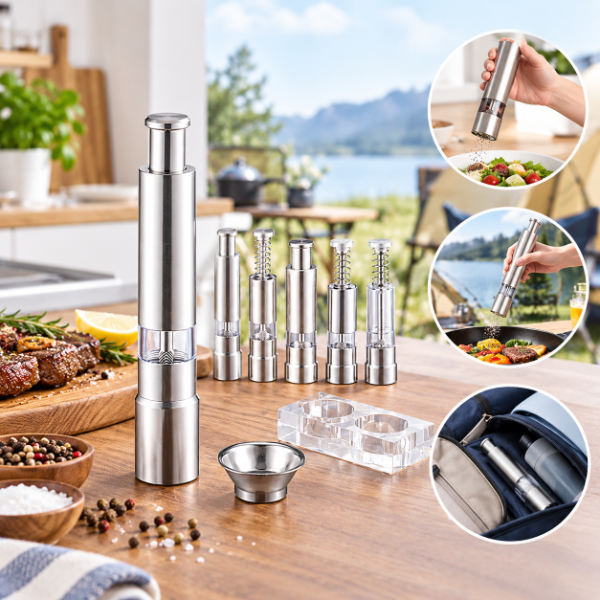
Portable cooking tools are becoming more closely connected with the way people actually prepare food across different settings throughout a normal week. Home cooks, outdoor enthusiasts, travelers, and small households often look for utensils that take up little space while remaining easy to handle on a crowded counter.
This change is influencing how a Salt Grinder Manufacturer approaches product design, with greater attention to portability, simple operation, appearance, and everyday convenience. A grinder is no longer used only at the dining table the way it might have been a generation ago.
It may travel in a picnic basket to the park, sit beside a portable stove at a campsite, or remain on a compact kitchen shelf in a studio apartment. These different settings are creating new expectations for salt and pepper grinder design that didn't exist when most kitchens had room to spare.
Manufacturers are responding by exploring shapes and operating methods that suit changing cooking habits without making the products unnecessarily complicated to use. The goal is fitting into a routine, not adding another gadget that gets left in a drawer.
Why Is Portability Becoming More Important in Grinder Design?
Kitchen space can be limited in apartments, small homes, recreational vehicles, and outdoor cooking areas where every surface already has a job. A large seasoning tool may prove inconvenient when several utensils already compete for the same countertop real estate.
Compact grinders can help users keep essential seasoning tools within reach without taking up excessive room next to the cutting board. The growing interest in portable cooking also adds another reason to consider size and handling carefully.
A Portable Pepper Grinder can get carried between the kitchen, dining area, campsite, picnic table, and travel setup without much fuss. Its usefulness depends on how easily it can be packed, carried, opened, and used once someone actually needs it.
| Usage Setting | Design Consideration |
|---|---|
| Compact kitchen | Space-saving form |
| Picnic | Easy carrying |
| Camping | Simple handling |
| Outdoor cooking | Convenient operation |
| Travel | Compact storage |
Portability doesn't necessarily mean making every component smaller than it needs to be. The overall design needs to remain comfortable to hold and practical to operate, even after shrinking the footprint. This balance is becoming a genuinely important part of product development for manufacturers serving different cooking markets at once.
How Are Outdoor Cooking Habits Influencing Salt and Pepper Grinders?
Outdoor cooking creates a genuinely different environment from a traditional kitchen with its fixed counters and cabinets. Users may prepare food on a picnic table, camping surface, balcony, patio, or portable cooking station set up for the afternoon.
These spaces often have a lot less room for storing utensils than a kitchen drawer would provide. A grinder used outdoors therefore needs to fit naturally into a temporary cooking arrangement that gets packed up again within hours.
A compact body can make packing a lot easier, while a simple operating method can reduce the number of steps needed during meal preparation over an open flame. Users may also want to season food while standing, moving between cooking tasks, or sharing food with others gathered around the same table.
This makes handling a genuinely important consideration for anyone designing these products. A grinder that's easy to pick up and return to its place can become a practical part of an outdoor cooking kit that doesn't get left behind.
Manufacturers are also paying attention to how products withstand normal transportation between locations across a bumpy drive. Storage cases, protective covers, secure closures, and stable shapes may all influence how a grinder fits into mobile cooking routines built around convenience. The focus is shifting toward products that work as naturally outdoors as they do sitting on a kitchen shelf back home.
Why Is One-Handed Operation Gaining Attention?
Cooking often involves several tasks happening at the same time, with hands rarely free for long. A person may be holding a utensil in one hand while seasoning food with the other hand at a busy stovetop.
This has increased interest in grinder designs that can be operated with limited hand movement, since reaching for a second tool isn't always practical mid-cook. One-handed operation can make seasoning a lot more convenient during an active cooking session.
It may also prove useful when preparing food at a crowded kitchen counter or outdoor cooking station where elbow room is scarce. The operating mechanism should feel natural, rather than requiring unnecessary adjustments that interrupt the flow of a meal.
A Salt and Pepper Gravity Grinder is one design approach associated with convenient handling, since its operation can be linked with the way the product is held or positioned during use. The appeal of this type of product depends on the user's habits and the overall design fitting those habits.
| User Situation | Potential Convenience |
|---|---|
| Cooking with one hand occupied | Easier seasoning |
| Outdoor preparation | Reduced handling steps |
| Shared dining | Quick access |
| Compact kitchen work | Less counter movement |
One-handed operation isn't simply about speed at the stove. It's also about reducing interruptions during ordinary cooking that already has enough moving parts. For product developers, this means considering how the grinder fits into a user's natural hand movements throughout a typical meal.
How Are Compact Kitchens Changing Grinder Shapes?
Smaller kitchens require more careful use of counter and storage space than a sprawling farmhouse layout would demand. When every utensil has to share a limited area, product shape can influence how efficiently the available space actually gets used day to day.
Tall and narrow forms may suit some storage arrangements tucked beside a spice rack, while compact rounded designs may work better in others sitting on an open shelf. The shape can also affect how easily a grinder is picked up and placed back after use without knocking over something else.
Manufacturers are therefore considering both storage and handling when developing products for compact kitchens where space is at a premium. A grinder may sit beside a cutting board, cooking surface, or dining area for much of the day rather than staying hidden away.
Its appearance can become part of the kitchen environment, rather than simply being tucked into a cabinet out of sight. This has encouraged greater attention to clean forms and practical proportions that look intentional on a shelf.
A Pepper Grinder Manufacturer may also consider whether the same design language can get applied across different seasoning products in the same line. Matching salt and pepper grinders can create a genuinely more organized visual appearance on a small counter. The product becomes part of both the cooking process and the surrounding space it occupies daily.
What Role Does Table Aesthetics Play in Modern Grinder Design?
Seasoning tools are often left on dining tables where guests can easily reach them without asking. This makes appearance genuinely relevant to product development, since the grinder is on display far more than it's tucked away.
Consumers may want grinders that complement tableware, rather than looking like purely functional kitchen equipment pulled from a utility drawer. Surface finishes, shapes, colors, and overall proportions can influence how a grinder fits into different dining environments across a household.
The design may need to suit casual family meals just as well as more carefully arranged dining spaces set for company. A simple visual style can make the product a lot easier to combine with different table settings without clashing.
Manufacturers may also develop coordinated salt and pepper products, so the pair looks consistent once placed together on a table.
| Design Element | Table Use Consideration |
|---|---|
| Overall shape | Complements surrounding tableware |
| Surface finish | Influences visual character |
| Color choice | Supports different dining styles |
| Pairing design | Creates visual consistency |
| Size | Balances appearance and handling |
Table aesthetics doesn't replace functionality in the final design. The grinder still needs to be comfortable to use and suitable for the intended seasoning application at hand. The growing interest in attractive kitchen accessories simply means that appearance is becoming part of the overall user experience, not an afterthought tacked on at the end.
How Is Product Development Responding to Different Consumer Preferences?
Not every consumer wants the same grinder sitting on their shelf. Some users prefer a traditional appearance passed down from a grandparent's kitchen, while others look for compact forms that fit modern apartments with less storage.
Outdoor cooks may prioritize portability above all else, while households may care more about easy storage and table presentation for everyday meals. This variety is influencing how manufacturers approach product development across their catalogs.
Instead of creating one design for every situation, manufacturers can develop different product concepts around specific use cases that actually matter to buyers. A Salt Grinder Manufacturer may explore different shapes, operating methods, materials, and visual treatments to address these varied preferences.
A Pepper Grinder Manufacturer can apply a similar approach to products intended for different cooking environments across a range of customers. Custom production can also give buyers more flexibility when developing products for particular markets they're trying to reach.
Customization may involve appearance, product structure, packaging, or coordinated sets sold together as a pair. The value of customization comes from matching the product with a genuine user need, rather than adding features simply because they're possible. This can help manufacturers respond to market changes without piling on unnecessary complexity. Product development becomes more focused once design decisions are connected with real cooking situations people actually face.
Why Does Easy Cleaning Matter for Portable Grinders?
Portable cooking products are often moved between different locations throughout a busy week. Food particles, seasoning residue, and moisture can collect around the exterior or operating areas during normal use, especially outdoors.
A grinder that's easy to handle but difficult to clean may become a lot less convenient over time as residue builds up. Manufacturers are therefore paying attention to accessible surfaces and practical product construction from the earliest design stages.
Users generally benefit when routine cleaning doesn't require complicated disassembly just to wipe away some pepper dust. The cleaning method should still follow the care instructions provided for the specific product, since materials vary.
This consideration is especially relevant for outdoor users who may have limited access to kitchen cleaning facilities while camping or picnicking. A compact grinder can prove more useful when it's simple to wipe, store, and prepare for the next meal without much hassle.
Cleaning also connects with table presentation in a household setting. A product that remains visually neat can fit a lot more naturally into a dining environment where guests are watching. For manufacturers, maintenance is therefore part of the wider product experience, rather than a separate concern addressed as an afterthought.
How Are Manufacturers Balancing Function and Visual Design?
Modern grinder development involves more than choosing a container and adding a grinding mechanism on top. The product needs to work as a complete object that users can carry, hold, operate, clean, store, and display across many different moments.
Portability affects the shape from the first sketch. One-handed use influences the operating method chosen for the mechanism. Outdoor cooking affects handling and storage requirements built into the housing. Compact kitchens influence dimensions and placement on a shelf. Table aesthetics affects the visual treatment applied to the surface.
These factors are closely connected in ways that aren't always obvious at first glance. A design change in one area can affect another part of the user experience without anyone intending it.
For example, making a grinder more compact may improve storage but change the way it feels in the hand during use. Adding decorative details may improve appearance while making cleaning a lot less convenient than a plainer surface would allow.
Product development therefore requires a genuinely balanced approach across every stage of the process. Manufacturers are increasingly looking at the complete usage process, rather than focusing on one isolated feature in a vacuum. The growing range of cooking environments is encouraging this broader way of thinking about grinder design across the industry.
A Portable Pepper Grinder may need to move between several settings within a single week, while a Salt and Pepper Gravity Grinder may focus on convenient everyday operation at the stove. At the same time, a Salt Grinder Manufacturer or Pepper Grinder Manufacturer must consider how these products fit into kitchens, outdoor cooking routines, and dining spaces all at once. These trends are shaping a product category that combines portability, practical handling, compact storage, and table-friendly design into one object. As cooking habits continue to diversify across households, grinder design is increasingly being influenced by where people cook, how they handle seasoning tools, and how these small products fit into everyday spaces that keep changing shape.
Recommended Products
-
 CH-01
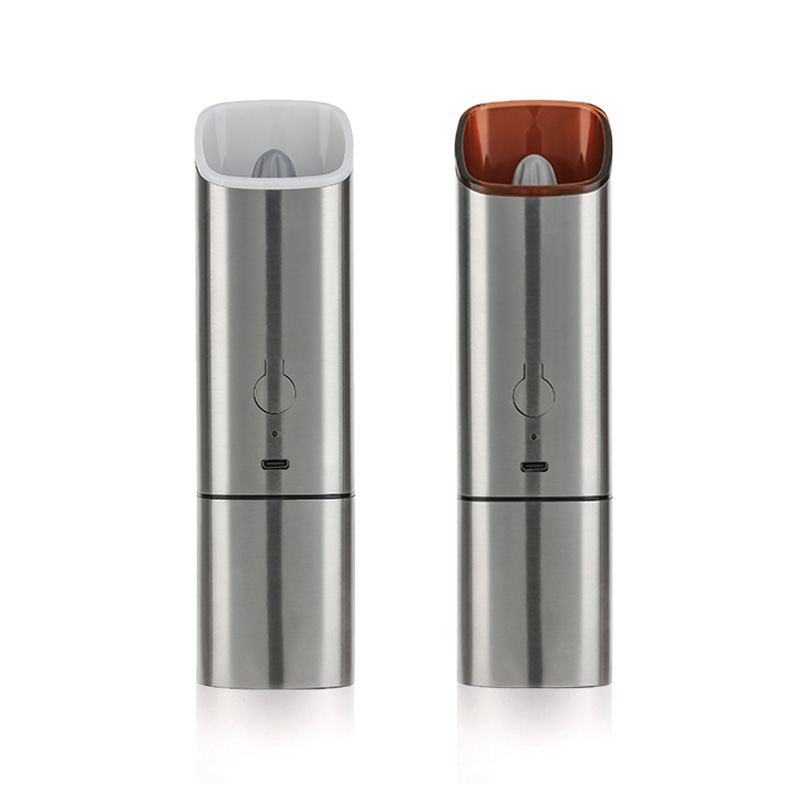
CH-01USB Rechargeable Electric Salt Pepper Grinder
-
 CH-01P
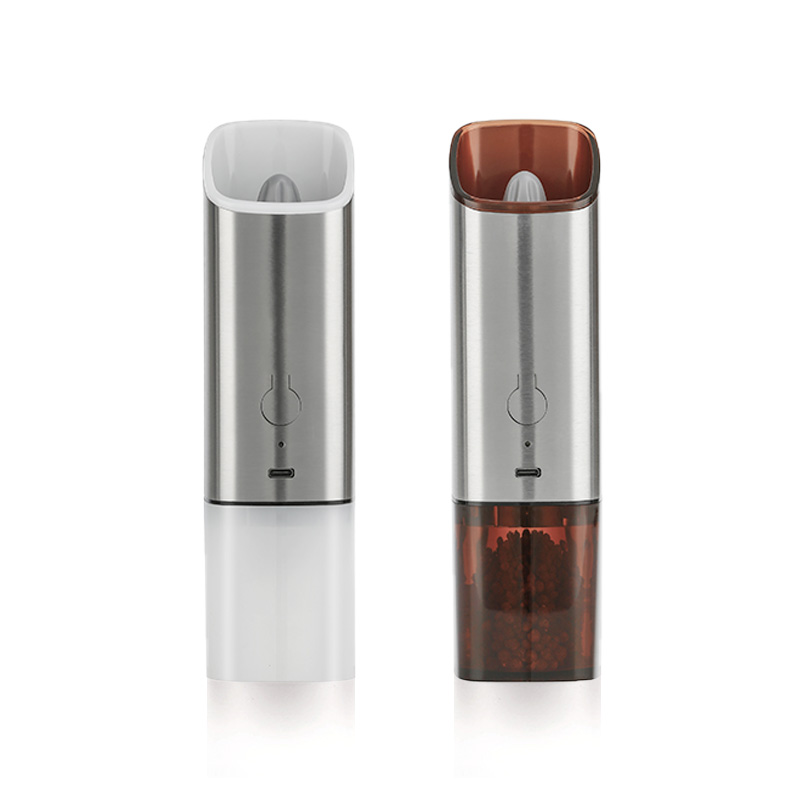
USB Rechargeable Electric Salt And Pepper Mill Set
-
 DH-00
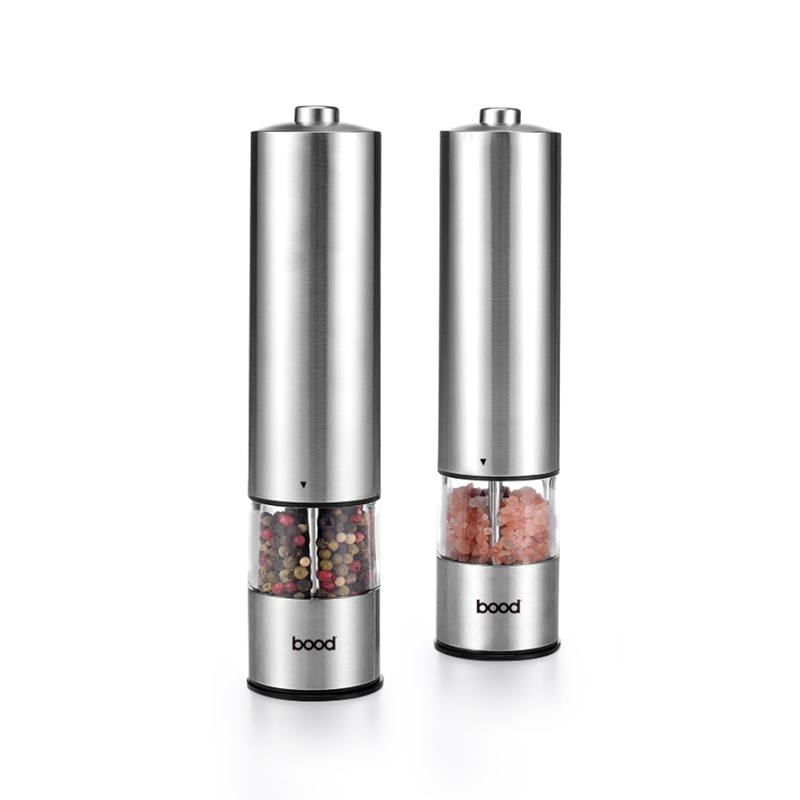
DH-00Classy Design Electric Pepper Mill With Stainless Steel Body
-
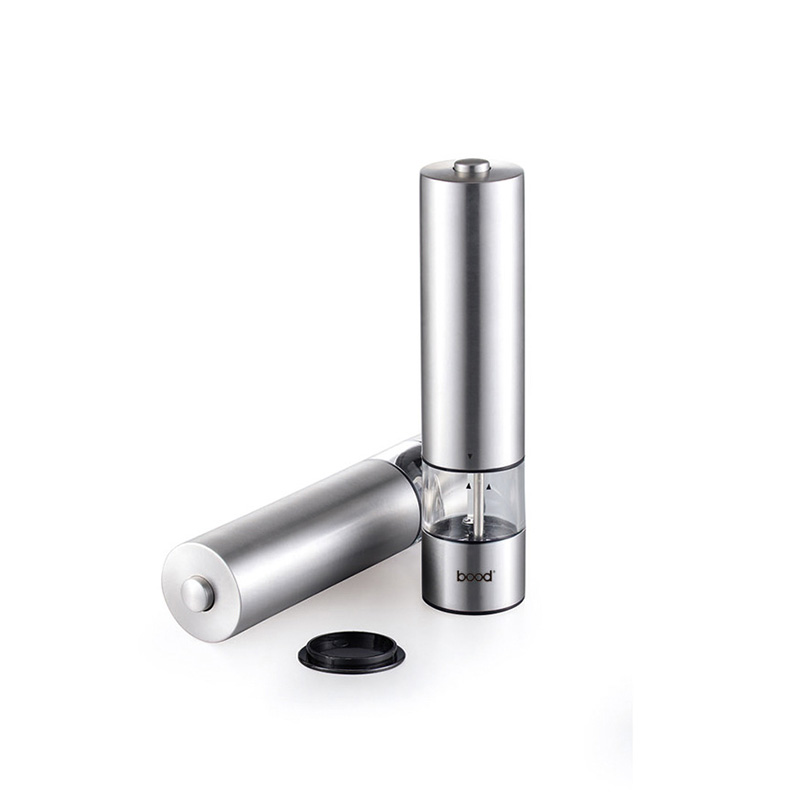 DH-01
DH-01Classic Electric Stainless Steel Salt And Pepper Grinder
-
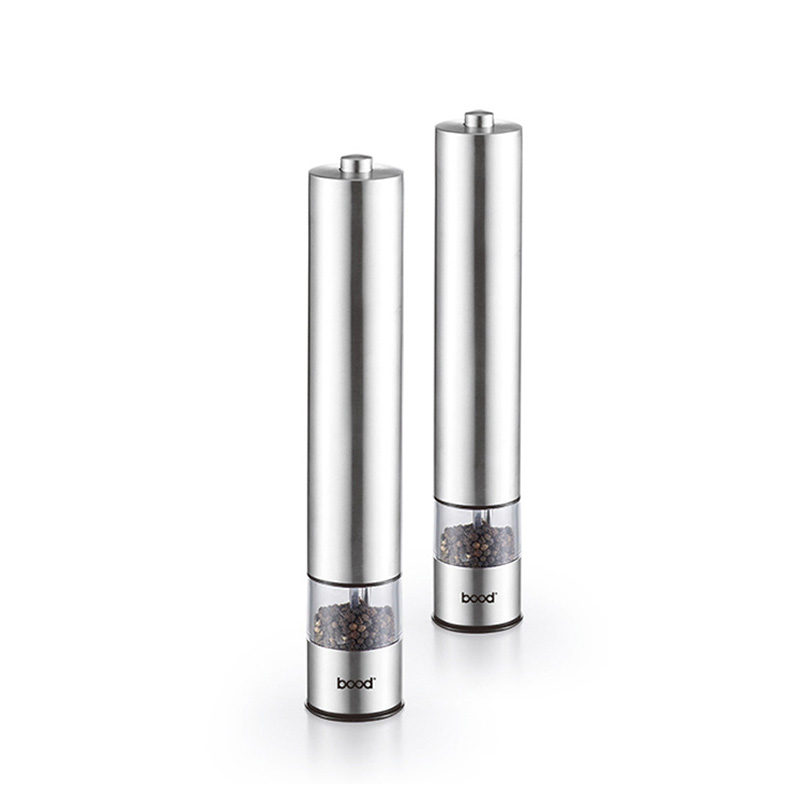 DH-01C
Electric Tall Salt and Pepper Mill Grinder with Flat Head
Copyright © Yongkang Funansheng Industry & Trade Co., Ltd.

China Pepper Grinder