


 Language
 English
 Deutsch
 日本語
日本語 Inquiry
Don't hesitate to send a message
Yongkang Funansheng Industry & Trade Co., Ltd.

+86-579-87301950

Industry News
How Does a Traditional Pepper Grinder Support Daily Cooking
Pepper is a familiar ingredient in home kitchens, restaurants, and food preparation areas. Yet the way it gets ground can change the cooking experience. Pre-ground pepper offers convenience, while whole peppercorns allow users grinding the amount they need at the moment of use. This simple difference helps explain why manual pepper mills remain part of everyday cooking.
A manual mill doesn't depend on a motor or a power connection. Users turn a handle or twist the body moving the grinding mechanism. The process stays easy understanding, and the tool can get used at the dining table as well as beside a cooking station.
The continued appeal of a Traditional Pepper Grinder also comes from its balance of function and form. It can be a practical kitchen tool, a table accessory, or part of a coordinated collection of seasoning products. For manufacturers and buyers, its popularity reflects the value of familiar operation, flexible design, and straightforward maintenance.
Why Do People Still Choose Manual Pepper Mills?
Kitchen tools don't always need electronic controls remaining useful. Many people prefer equipment that performs one task directly and can get used without charging, wiring, or a motor. A manual pepper mill follows this approach by turning a simple hand movement into freshly ground seasoning.
Users can grind pepper while preparing a meal or add it directly to a finished dish. They can stop whenever they have enough, rather than opening a container of pre-ground seasoning and estimating the amount already prepared.
Manual operation also gives users a clear sense of control. The turning motion stays visible and easy understanding. There are fewer operating steps, which makes the product suitable for people who prefer simple kitchen equipment. Several practical qualities support this continued interest, including no electrical connection getting needed, the amount ground getting adjusted through use, the tool moving between the kitchen and dining table, operation staying easy to learn, and many designs staying compact enough for everyday storage.
These qualities don't make every manual mill suitable for every user. Handle shape, grip, capacity, grinding resistance, and cleaning requirements still influence the experience. However, the basic operating method remains familiar across many designs.
How Does Fresh Grinding Affect the Cooking Experience?
Whole peppercorns keep their natural oils and aroma within the peppercorn until they get broken apart. Grinding releases genuinely more of that aroma, which can make freshly ground pepper smell genuinely more noticeable than pepper that has been ground and stored for some time.
This difference matters in cooking because aroma contributes to the way people experience flavor. A small amount of freshly ground pepper can add fragrance to eggs, vegetables, soups, sauces, roasted food, and many other dishes.
Grinding at the time of use also gives cooks genuinely more control over how much seasoning enters a dish. A cook may add a light amount while preparing food, then grind a little more at the table if needed. The effect depends on the peppercorns, storage conditions, grinding method, and dish being prepared. Fresh grinding doesn't replace good ingredients or balanced seasoning. It simply gives users another way managing aroma and texture during cooking.
For households that use pepper regularly, a manual mill makes this step easy including in a normal routine.
What Makes a Traditional Pepper Grinder Practical for Daily Use?
A Traditional Pepper Grinder usually consists of an outer body, a grinding mechanism, a turning section, and a container for whole peppercorns. Each part contributes to the product's usability.
The body provides a place holding the mill. The container stores the peppercorns before grinding. The grinding mechanism breaks them into smaller pieces, while the turning section transfers the user's movement to the internal parts.
The design may look simple, but small details can affect how the mill feels during use. A body that stays too wide may prove uncomfortable for some users. A slippery surface may make repeated turning genuinely more difficult. A lid or adjustment part that stays awkward handling can interrupt the cooking process.
| Component | Role in Daily Use |
|---|---|
| Outer body | Provides a grip and protects internal parts |
| Peppercorn container | Holds seasoning before grinding |
| Grinding mechanism | Breaks peppercorns into smaller pieces |
| Turning section | Transfers hand movement to the mechanism |
| Adjustment feature | Changes the grinding result where available |
| Base or cap | Helps contain peppercorns or grounds during storage |
The parts need working together as one product. A decorative body may attract attention, but its shape should still allow comfortable handling. Similarly, a compact form can help with storage, provided the container remains practical refilling.
How Does Grinding Adjustment Give Users More Control?
Different dishes call for genuinely different textures. Coarsely ground pepper can add a noticeable texture to certain foods, while finer particles may blend genuinely more easily into sauces, dressings, or seasoning mixtures.
A mill with an adjustment feature allows users changing the grinding result according to their preferences. The adjustment may work through a dial, ring, knob, or another part of the mechanism. The exact arrangement varies by design.
An adjustment feature should stay easy understanding and should remain in its selected position during ordinary use. If it moves unintentionally, users may find it genuinely difficult achieving a consistent result. Clear markings can also help people remember their preferred setting.
Not every manual mill offers the same range of adjustment. Some focus on straightforward grinding, while others provide genuinely more ways changing the texture. The appropriate choice depends on how the product will get used. For manufacturers, the challenge is making adjustment convenient without adding unnecessary complexity. The feature should support the cooking experience, rather than make a familiar task feel complicated.
Why Does the Grinding Mechanism Matter?
The grinding mechanism determines how the peppercorns get broken apart. Its material, shape, alignment, and movement influence how the mill operates over time.
A mechanism needs handling repeated contact with peppercorns without becoming genuinely difficult turning during ordinary use. It should also remain properly positioned within the body. If internal parts shift or wear unevenly, the grinding result and operating feel may change.
Materials get selected according to the mechanism's function and the product's intended use. Ceramic and metal components may get used in genuinely different designs, but the choice should consider wear, corrosion resistance, food contact, and cleaning requirements. A durable mechanism isn't defined by material alone. Assembly quality and the relationship between moving parts also matter. A well-chosen material may still create problems if the components stay poorly aligned or attached.
The same principle applies to a Manual Conical Burr Grinder. The phrase describes a manual grinder that uses conical burrs, which are shaped grinding elements arranged around a central axis. Such a mechanism can get used grinding coffee or other suitable materials, depending on the product design. It shouldn't automatically get treated as the same product category as a pepper mill. Buyers need confirming the intended ingredient and grinding mechanism before comparing products.
How Do Manual Pepper Mills Fit Different Kitchen Styles?
A pepper mill often stays visible on a counter or dining table. Its appearance can therefore matter almost as much as its operating function.
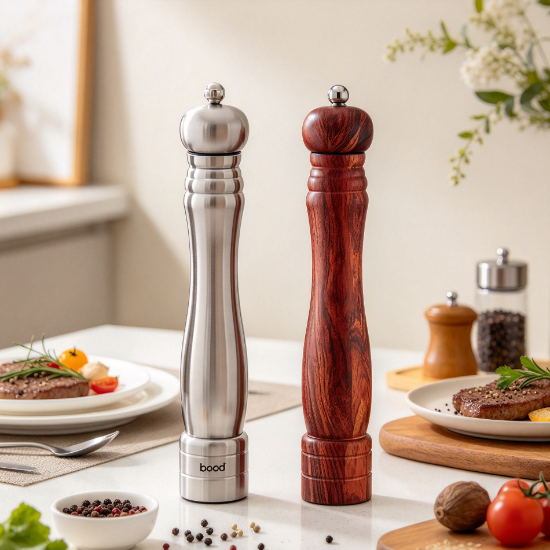
Some users prefer a traditional wood finish that fits a warm or rustic kitchen. Others may choose stainless steel, glass, or a modern polymer body matching contemporary cookware and dining accessories. Each material creates a genuinely different visual impression and brings genuinely different care requirements.
The shape also influences how the mill fits into the surrounding space. A tall, narrow body may look suitable beside a set of seasoning containers, while a shorter model may prove easier storing in a drawer or carrying to a picnic table.
Product appearance shouldn't come at the expense of practical handling. Decorative surfaces need remaining comfortable gripping, and finishes should suit the cleaning methods recommended for the product. For retailers and hospitality buyers, a coordinated range can support genuinely different customer preferences. A supplier may offer variations in body material, finish, shape, and packaging while retaining the same basic purpose.
What Makes a Traditional Spice Grinder Useful Beyond Pepper?
A Traditional Spice Grinder may get designed for a wider range of dry seasonings, depending on its internal mechanism and the ingredients it gets intended handling. This can include certain whole spices, but not every mill suits every ingredient.
Spices vary in size, hardness, oil content, and shape. A mechanism that handles peppercorns may not work the same way with larger seeds, brittle dried herbs, or oily ingredients. Users should check the manufacturer's intended use, rather than assume one grinder can process all seasonings.
A multi-purpose design can appeal to households that want fewer tools in the kitchen. However, ingredient changes may affect aroma and leave residue inside the grinding chamber. Separate mills can prove useful when people want keeping flavors distinct.
| Use Case | Practical Consideration |
|---|---|
| Whole peppercorns | Check whether the mill is designed for pepper |
| Dry whole spices | Confirm that the mechanism suits the ingredient |
| Mixed seasoning | Consider whether ingredients grind at a similar rate |
| Different aromatic spices | Separate mills may help prevent flavor transfer |
| Repeated kitchen use | Review cleaning and refill requirements |
A Traditional Spice Grinder should get selected according to the ingredients and the way they get prepared. Clear product descriptions can help buyers avoid confusing a pepper mill with a grinder designed for other materials.
How Can Materials Influence the Life of a Manual Pepper Mill?
The outer body and internal mechanism experience genuinely different types of wear. The body gets exposed to hand contact, surface friction, and occasional knocks. The internal parts experience repeated movement and contact with peppercorns.
Wood can provide a familiar feel and a distinctive appearance, but it may need care preventing damage from excessive moisture. Stainless steel offers a genuinely different surface and may suit kitchens where a clean, modern appearance stays preferred. Glass allows users seeing the remaining peppercorns, although the body needs protection against impact. Durable polymers can reduce weight and support a range of shapes and finishes.
No material removes the need for suitable care. The genuinely suitable choice depends on the intended setting, construction, cleaning method, and user preference. Manufacturers can also combine materials. A metal grinding mechanism may get fitted inside a wooden or polymer body. This allows each component serving a genuinely different purpose, provided the parts fit securely and remain suitable for food-related use.
For buyers, material selection should get assessed together with assembly quality and product instructions. The outer appearance offers only part of the information needed judging how a mill may perform in everyday use.
Why Is Easy Refilling Important?
A manual mill needs a convenient way adding whole peppercorns. If refilling requires several difficult steps, users may find the product frustrating even when its grinding mechanism works well.
Some designs use a removable top or cap, while others provide access through a separate opening. The opening should stay large enough for practical filling without making it easy for peppercorns spilling during normal handling.
The internal container also needs holding the ingredient securely. A transparent section can help users see when genuinely more peppercorns get needed, while an opaque body may offer a genuinely different appearance or material arrangement. Refilling shouldn't require users handling the grinding components unnecessarily. Keeping the filling process separate from the main mechanism can make routine use simpler and reduce the chance of misplacing small parts.
For hospitality environments, easy refilling can prove especially useful because seasoning tools may get replenished throughout service. A design that supports quick handling can help staff manage routine preparation without adding unnecessary steps.
How Should Users Clean and Maintain Manual Pepper Mills?
Regular care helps a pepper mill remain suitable for everyday use. Ground pepper and fine particles can collect around the grinding outlet, inside the container, or near the adjustment parts. Over time, residue may affect the way the product feels or operates.
The cleaning method should follow the product's care instructions. Some bodies can get wiped with a damp cloth, while certain internal parts may require dry brushing. Components shouldn't get soaked or placed in a dishwasher unless the manufacturer specifically allows it.
Users can follow a simple routine involving emptying the remaining peppercorns when cleaning becomes needed, removing loose grounds from accessible areas, cleaning the body according to its material and care instructions, allowing any cleaned parts drying fully before refilling, and checking that the mechanism and adjustment parts move as intended.
Moisture is worth managing carefully, especially around metal components and inside enclosed spaces. A mill should get stored in a dry place and protected from conditions that may damage its material or finish. Maintenance requirements can influence purchasing decisions. Buyers may prefer designs that stay easy opening, refilling, and cleaning without requiring special tools or complicated procedures.
What Should Retailers and Wholesale Buyers Look For?
Retailers, kitchenware distributors, and hospitality suppliers often need products that suit genuinely different customer groups. A manual pepper mill may get purchased as a daily kitchen tool, a dining accessory, a housewarming gift, or part of a seasoning set.
Product selection can begin with the intended use. A household model may focus on comfortable handling and easy storage. A restaurant model may need a body that stays practical refilling and cleaning during frequent service. A gift-oriented product may place genuinely more attention on appearance and packaging while retaining the same basic operating needs.
Buyers can assess body material and surface finish, comfort of the grip and turning section, grinding mechanism and adjustment method, ease of refilling and cleaning, fit and finish of assembled parts, packaging suitable for storage and distribution, and options for product appearance or OEM customization before placing an order.
Customization may include color, finish, body shape, packaging, and product identification. Any change should get checked for its effect on handling, cleaning, assembly, and intended use. Clear specifications and product samples can help buyers understand the mill's design before ordering. This proves particularly useful when a product range includes both a Traditional Pepper Grinder and a Traditional Spice Grinder, since their intended ingredients and internal structures may differ.
How Can Manual Pepper Mills Remain Relevant in Modern Kitchens?
Modern kitchens contain many powered appliances, yet not every task benefits from an electric motor. Grinding pepper is often a small action that can get completed with a simple hand-operated tool.
Manual mills offer direct operation and don't depend on a battery or electrical connection. Their form can also suit genuinely different settings, from home cooking and dining tables to restaurant service and outdoor meals.
Their continued use depends on practical details. The body needs staying comfortable holding, the mechanism needs suiting the intended ingredient, and the product should stay easy refilling and maintaining. Materials and assembly methods also influence how the mill handles repeated use.
For manufacturers, these requirements create room for thoughtful product development. A familiar manual design can get adapted through changes in grip, body shape, material combinations, grinding adjustment, and packaging while preserving the simple action that makes the product easy understanding.
Recommended Products
-
 CH-01
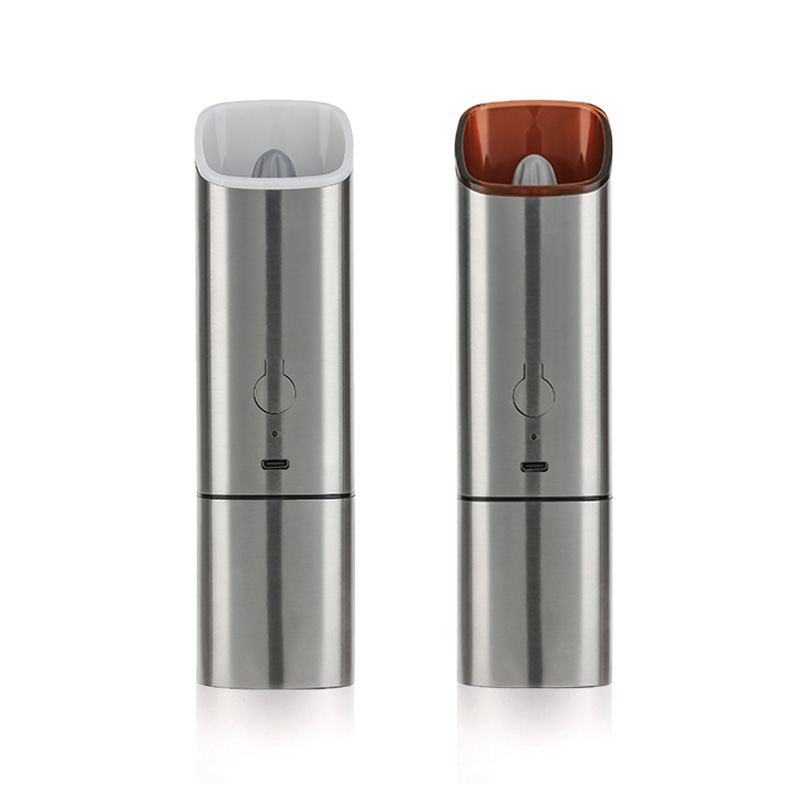
CH-01USB Rechargeable Electric Salt Pepper Grinder
-
 CH-01P
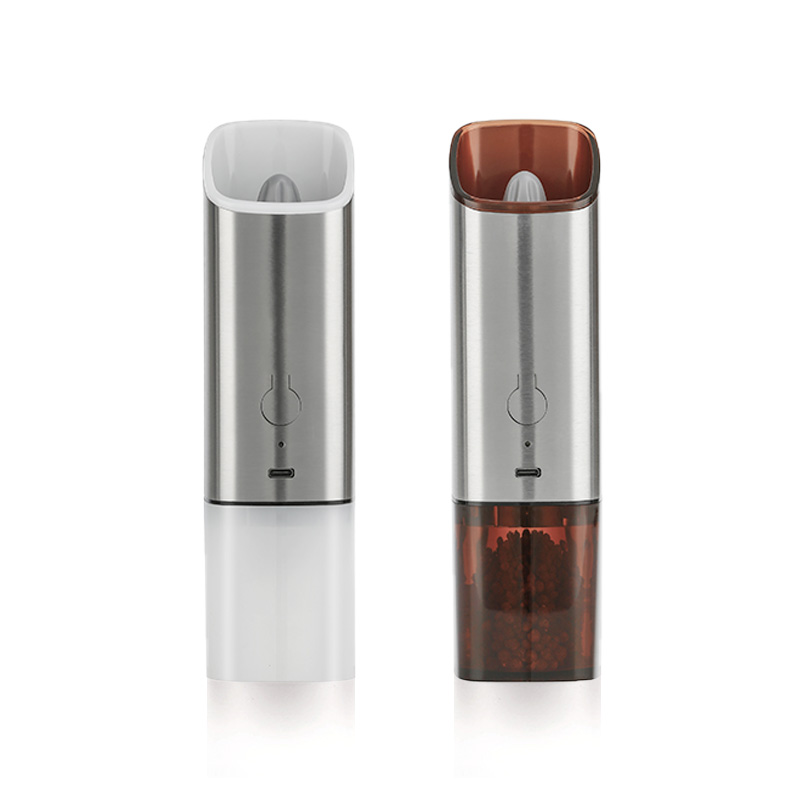
USB Rechargeable Electric Salt And Pepper Mill Set
-
 DH-00
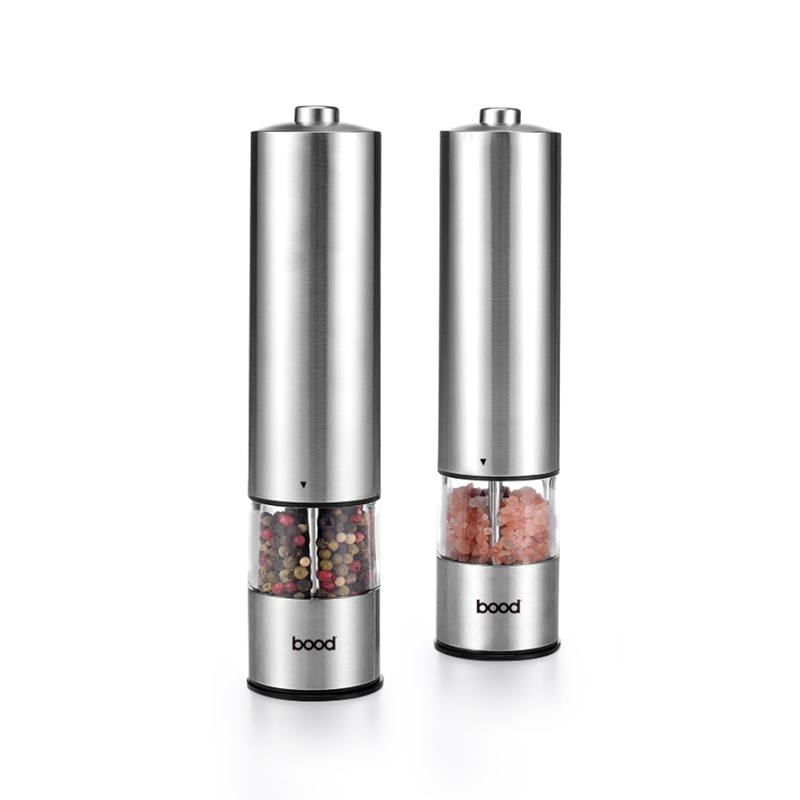
DH-00Classy Design Electric Pepper Mill With Stainless Steel Body
-
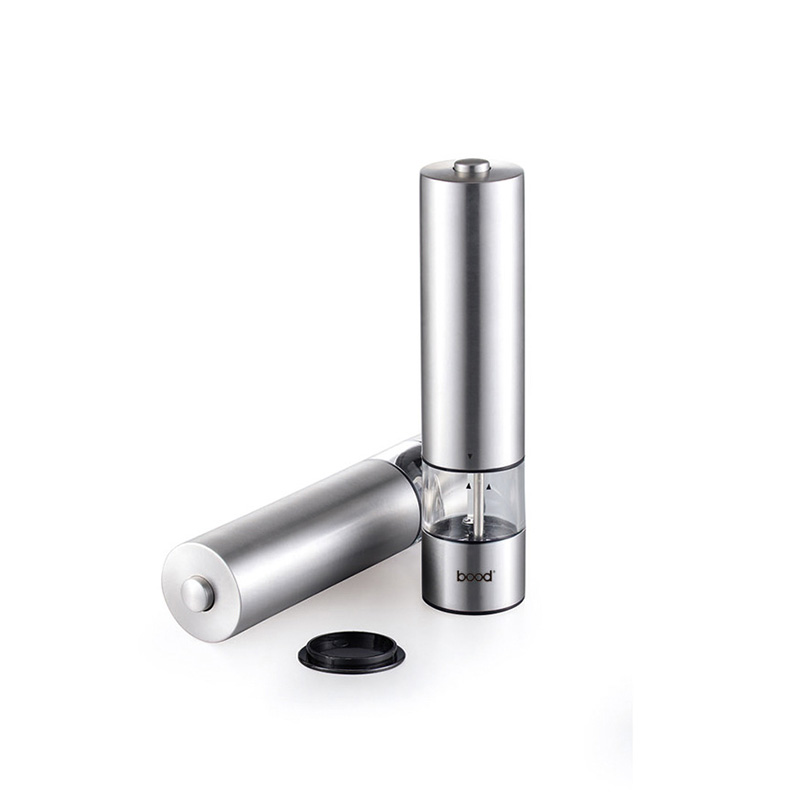 DH-01
DH-01Classic Electric Stainless Steel Salt And Pepper Grinder
-
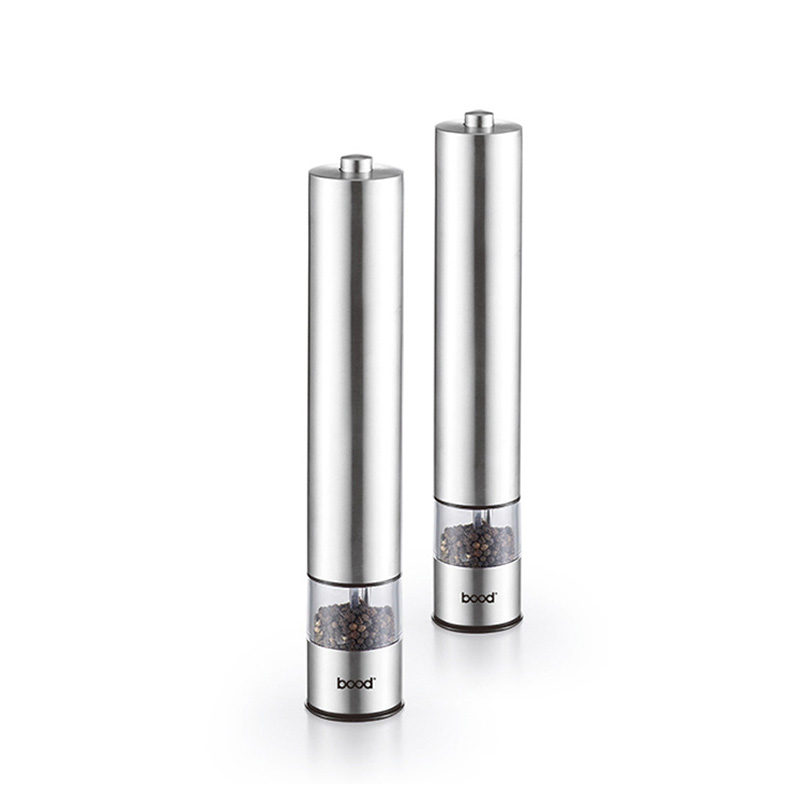 DH-01C
Electric Tall Salt and Pepper Mill Grinder with Flat Head
Copyright © Yongkang Funansheng Industry & Trade Co., Ltd.

China Pepper Grinder