


 Language
 English
 Deutsch
 日本語
日本語 Inquiry
Don't hesitate to send a message
Yongkang Funansheng Industry & Trade Co., Ltd.

+86-579-87301950

Industry News
Portable Pepper Mills: Battery vs Manual Performance
Choosing a pepper grinder sounds straightforward until you've been halfway through a camping trip with a dead battery, or wrestled with a stiff manual mill while trying to season a dish with one hand. These are the moments that reveal what a grinder is actually made of — not what the packaging promises. For anyone comparing electric and manual options, a Portable Pepper Mill sits at the center of a genuinely interesting trade-off: the ease of powered grinding on one side, and the quiet reliability of mechanical design on the other. Neither wins unconditionally. The right answer depends almost entirely on how, where, and how often the grinder gets used.
Understanding the Core Trade-Off
Convenience and Mechanical Reliability Pull in Different Directions
Electric grinders are appealing for a clear reason — they remove the physical effort of grinding entirely. One button, a few seconds, done. For users who cook frequently, entertain often, or simply prefer a modern kitchen aesthetic, that ease carries real weight. The grinder becomes something you reach for without thinking.
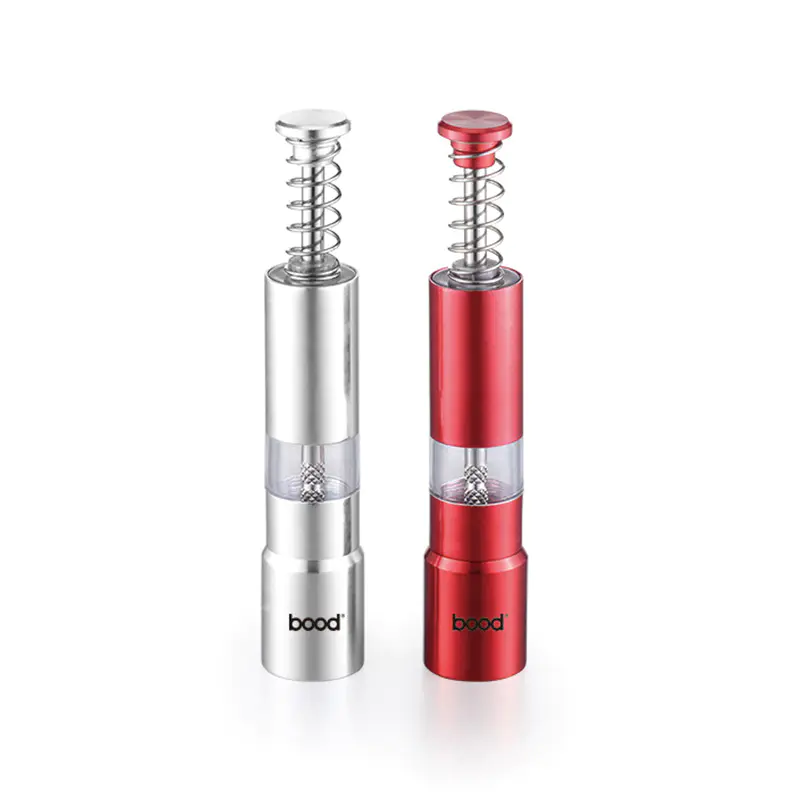
Manual grinders work differently. They ask something of the user, but in return they offer something that no electric model can fully replicate: independence from power sources. No battery, no charging cable, no motor to burn out. The mechanism is the product, and when that mechanism is well-built, it can outlast its electric equivalents by a considerable margin.
The tension between these two approaches isn't really about grinding pepper. It's about what kind of reliability matters more in the specific contexts where the grinder gets used.
What "Portable" Actually Demands from a Grinder
Portability changes the equation in ways that home kitchen comparisons don't fully capture. A grinder that lives on a kitchen counter can be plugged in or recharged overnight without disruption. One that travels in a backpack, a travel bag, or gets pulled out at a campsite has to perform without that infrastructure.
For genuinely portable use, the relevant questions shift:
- How long does the battery hold charge between uses?
- Does the grinder still work if the battery dies mid-trip?
- Is the body compact and durable enough to handle being packed and transported?
- Does the mechanism hold up to temperature variation, humidity, or rough handling?
- These questions don't have the same answers for electric and manual designs. And that's exactly where the comparison gets interesting.
Battery-Powered Portable Grinders: Where They Shine and Where They Don't
The Genuine Appeal of Electric Operation
One-handed grinding, consistent particle size regardless of how much force the user applies, and a level of speed that manual operation simply can't match — these are real advantages that make battery-powered grinders attractive for home use and light travel. For users with limited hand strength or dexterity, the accessibility benefit is even more significant.
Modern rechargeable designs have also addressed one of the older criticisms of electric grinders: the inconvenience of replacing disposable batteries. USB charging has made it easier to keep a grinder powered without maintaining a supply of replacement cells. That's a genuine improvement over earlier designs.
Battery Anxiety Is a Real Limitation in Portable Contexts
Despite those improvements, battery dependency creates a specific kind of fragility that matters whenever a grinder is being used away from reliable power access. A grinder that needs charging every few days functions well in a kitchen routine — but on a week-long camping trip, or in a location where charging options are limited, that same dependency becomes a source of uncertainty.
Battery capacity also degrades over time. A grinder that holds a reliable charge when new will hold progressively less charge after repeated charge cycles. This isn't a flaw unique to pepper grinders — it's a fundamental characteristic of rechargeable battery chemistry — but it means the "portable" performance of an electric grinder changes across the lifespan of the product.
Common battery-related concerns that affect long-term satisfaction:
- Charge cycle degradation reducing usable battery life over months or years
- Motor performance dropping as battery charge depletes during a session
- Difficulty finding compatible replacement batteries or charging components after product discontinuation
- Electronic failure creating a grinder that is entirely non-functional rather than partially degraded
Motor Lifespan and Repair Considerations
When a manual grinder wears out, it typically degrades gradually — grinding becomes slightly less consistent, or the mechanism requires more effort. When an electric grinder's motor fails, the product usually stops working entirely. That binary failure mode is a meaningful difference for users who prioritize long-term value over short-term convenience.
Repair options for electric grinders are limited. The motor is typically sealed, and the electronics are not user-serviceable. A mechanical failure in an electric grinder usually means replacement rather than repair.
Manual Portable Grinders: Durability as a Design Philosophy
Why Fewer Moving Parts Translates to Longer Life
A well-constructed manual grinder has a relatively small number of components: a grinding mechanism, a body, an adjustment system, and a collection chamber. There's no motor to burn out, no battery to degrade, no circuit board to fail. The mechanical simplicity that some users find inconvenient is also what makes these designs last.
This durability advantage is especially pronounced in ceramic grinding mechanisms. Ceramic resists corrosion, doesn't absorb flavors or odors, and maintains its sharpness through extended use without the deterioration that steel mechanisms can experience over time. A ceramic burr grinding mechanism in a quality manual grinder can remain functional well past the point where an equivalent electric model would have needed replacement.
Manual Operation Fatigue: Real or Overstated?
The criticism of manual grinders — that they're physically tiring to use — is real for some users and irrelevant for others. It depends heavily on the grinding mechanism design, the coarseness setting, and the frequency of use.
A poorly designed manual grinder with a stiff or inefficient mechanism is genuinely fatiguing to operate. A well-designed one with a smooth ceramic burr requires minimal effort for typical seasoning quantities. The difference between these two experiences is almost entirely in the quality of the mechanism, not the manual operation format itself.
For users who grind small amounts at a time — a few turns to season a dish — the physical effort is negligible. For users who need large volumes of freshly ground pepper quickly, electric operation has a clear speed and effort advantage.
Travel and Outdoor Use Favor Manual Designs
The outdoor and travel use case consistently points toward manual designs for one straightforward reason: they work anywhere, in any conditions, without any external dependencies. No power outlet, no charging time, no dead battery on day three of a camping trip. The grinder performs exactly the same on a mountain trail as it does in a kitchen.
A plastic pepper mill in a compact manual format is particularly well-suited to travel — lightweight, durable against the incidental knocks of being packed in luggage, and completely indifferent to whether charging infrastructure is available. The portability benefit of electric designs is somewhat theoretical in contexts where power access isn't guaranteed.
Comparing the Two Approaches Across Common Use Scenarios
| Use Scenario | Electric Grinder | Manual Grinder |
|---|---|---|
| Home kitchen daily use | Convenient, quick, one-handed | Reliable, no power needed |
| Travel with reliable power access | Suitable with charging routine | Fully suitable, no limitations |
| Camping or outdoor use | Battery dependency is a liability | No limitations, works anywhere |
| Long-term household use | Motor/battery lifespan a factor | Durable, lower failure risk |
| Users with limited hand strength | Significant advantage | May be challenging |
| Cost of ownership over time | Higher (battery/motor replacement) | Lower (fewer failure points) |
| Aesthetic and modern kitchen fit | Strong visual appeal | Depends on design |
The pattern that emerges is consistent: electric grinders suit environments where convenience is the priority and power access is reliable. Manual grinders suit environments where independence and long-term durability matter more than automation.
The Grinding Mechanism Matters More Than Power Source
Why the Burr Quality Defines the Experience
Whether a grinder is electric or manual, the grinding mechanism is what determines grinding consistency, coarseness range, and long-term performance. A high-quality ceramic burr in a manual grinder will produce more consistent results than a low-quality metal grinding element in an electric one — regardless of what's powering the operation.
This is a point that gets lost in electric-versus-manual comparisons. The power source affects convenience. The grinding mechanism affects quality. Both matter, but they're separate variables, and evaluating them together muddles the decision.
When comparing options, assess:
- Grinding element material: ceramic burrs offer corrosion resistance and sustained sharpness; steel offers strength but may require more maintenance
- Adjustability: how wide is the coarseness range, and how easy is the adjustment mechanism to use?
- Consistency: does the grinder produce uniform particle sizes, or does output vary significantly from one grinding session to another?
- Cleaning: can the mechanism be accessed and cleaned without tools?
Does the Body Material Affect Portable Performance?
Body construction affects how a grinder handles the physical demands of portable use — being packed, carried, dropped, and used in varying conditions. A plastic pepper mill body resists corrosion, adds minimal weight, and tolerates incidental impact better than glass or ceramic alternatives that can crack or shatter.
For genuinely portable use, a lightweight polymer body with a durable internal mechanism is often a more practical combination than heavier materials that add weight without meaningfully improving grinding performance.
Making the Decision: Matching the Grinder to the Lifestyle
Questions Worth Asking Before Choosing
Rather than defaulting to a category preference, the more useful approach is to map specific use habits onto the characteristics of each type:
- Where does the grinder get used most often — primarily at home, or frequently away from home?
- Is power access reliable in those locations?
- How physically demanding is operation for the primary user?
- How important is visual design and kitchen aesthetics relative to functional performance?
- What's the expected ownership period — is this a short-term purchase or a long-term tool?
- How much does long-term maintenance cost matter?
There's no universal answer to any of these questions. A grinder that works well for a professional kitchen enthusiast who values convenience and charges devices daily is a different product from one that works well for a frequent traveler who needs reliability without infrastructure.
Where Rechargeable Designs Fit in the Middle
Rechargeable electric grinders occupy an interesting middle position. They remove the inconvenience of replacing disposable batteries while retaining the one-handed convenience of electric operation. For users who want electric convenience but dislike battery maintenance, they represent a reasonable compromise.
The trade-off is still present, though. Rechargeable designs still carry the motor lifespan concern, the battery degradation issue, and the dependency on charging access. They solve the specific problem of disposable battery replacement, not the broader limitations of electric operation in genuinely off-grid or long-travel contexts.
Choosing a Supplier Who Understands Both Formats
The decision between electric convenience and manual durability ultimately comes down to use context and personal priorities — not a general verdict about which technology is inherently better. Both formats have genuine strengths that suit different users and different situations. What matters most is matching the product's characteristics to the conditions it will actually face. For buyers and procurement teams sourcing portable grinders at volume, Yongkang Funansheng Industry & Trade Co., Ltd. manufactures a range of pepper mill products covering both electric and manual formats, with options spanning different body materials, grinding mechanisms, and design configurations suited to varied retail and OEM requirements. Their production experience across the plastic pepper mill category, combined with capacity for customized designs from a seasoned pepper mill factory, makes them a practical point of contact for buyers who need reliable product performance across multiple SKUs. If your sourcing requirements include portable grinder designs for specific markets or usage contexts, reaching out to discuss product specifications, customization options, and volume arrangements is a straightforward next step — and a pepper grinder factory with the technical range to cover both electric and manual formats gives buyers more flexibility to serve a broader customer base effectively.
Recommended Products
-
 CH-01
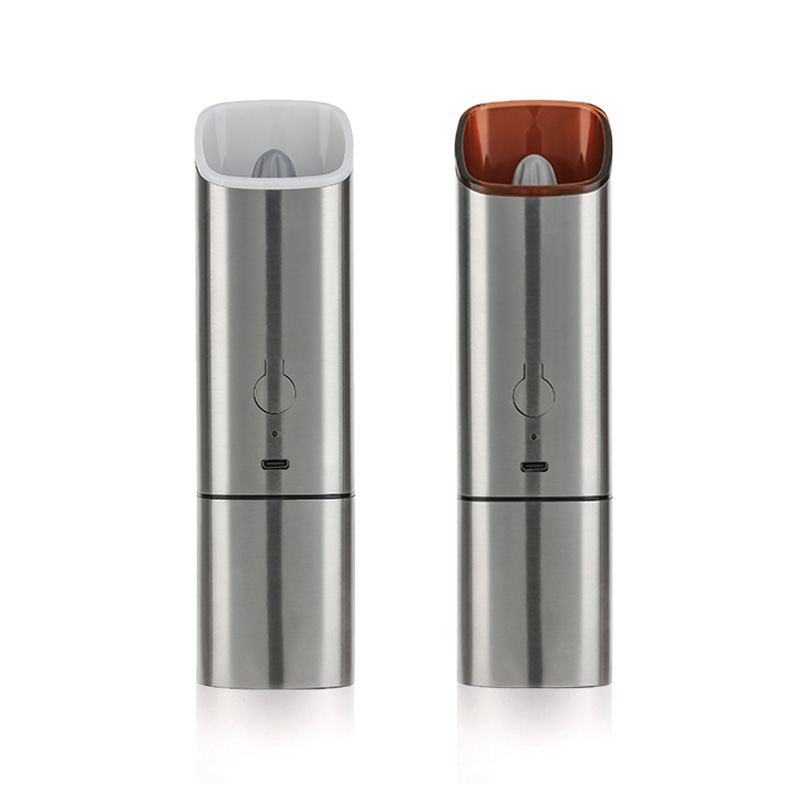
CH-01USB Rechargeable Electric Salt Pepper Grinder
-
 CH-01P
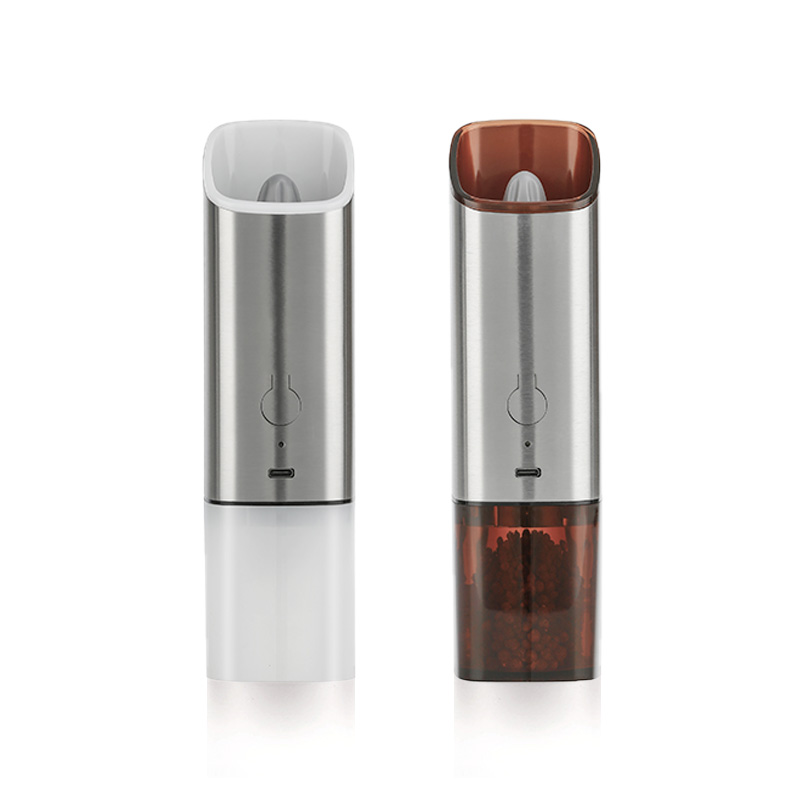
USB Rechargeable Electric Salt And Pepper Mill Set
-
 DH-00
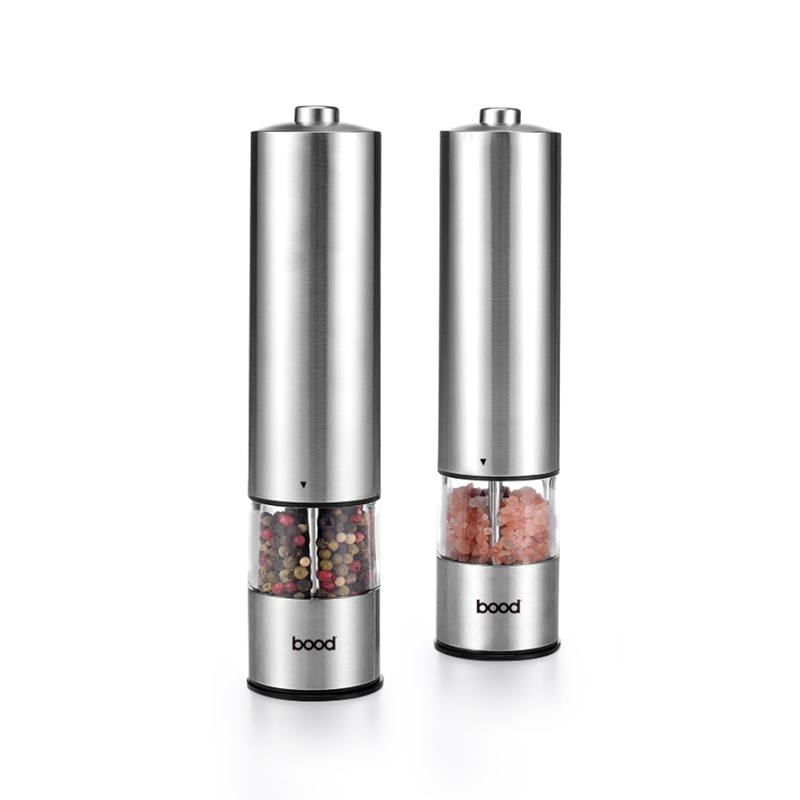
DH-00Classy Design Electric Pepper Mill With Stainless Steel Body
-
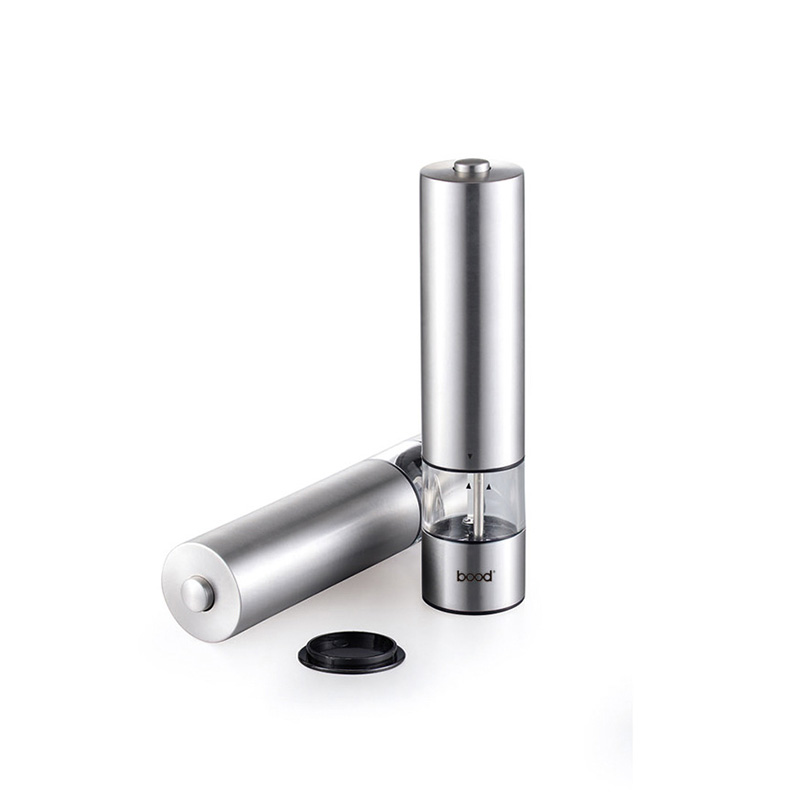 DH-01
DH-01Classic Electric Stainless Steel Salt And Pepper Grinder
-
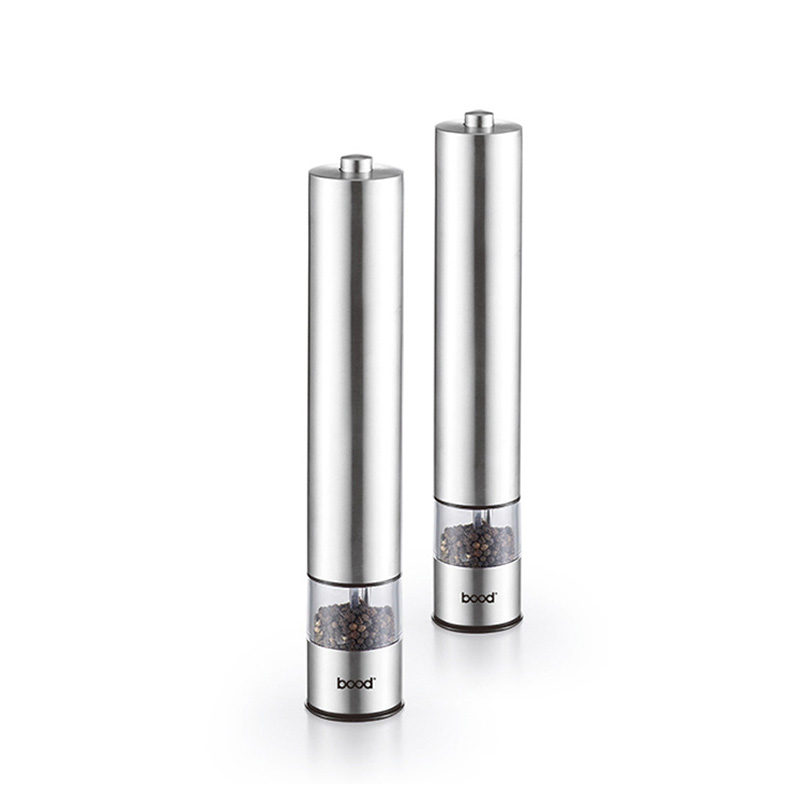 DH-01C
Electric Tall Salt and Pepper Mill Grinder with Flat Head
Copyright © Yongkang Funansheng Industry & Trade Co., Ltd.

China Pepper Grinder