


 Language
 English
 Deutsch
 日本語
 Inquiry
Don't hesitate to send a message
Yongkang Funansheng Industry & Trade Co., Ltd.

+86-579-87301950

Industry News
How Does a Stainless Steel Oil Jar Improve Daily Cooking
Oil shows up in almost every stage of cooking. It goes into a hot pan before vegetables hit the heat, gets drizzled over a finished salad, or gets measured into a bowl for a marinade. Because it's reached for so many times a day, the container holding it quietly shapes how smooth or clumsy kitchen work feels.
An oil jar does more than hold liquid in place. Its opening, handle, lid, body shape, and cleaning access all shape how someone actually uses it while cooking. A jar that's awkward to grip, or one that fights back during refilling, turns into a small daily annoyance rather than a helpful tool.
Households, restaurants, retailers, and kitchenware buyers all end up weighing the same tension: appearance against function. Material, pouring behavior, counter space, and upkeep all play into the decision. Suppliers who understand these pressure points tend to design accessories that fit real cooking habits rather than just photograph well.
Why Does the Shape of an Oil Jar Matter?
Shape decides how a jar sits on a counter, how it feels mid-pour, and whether it fits comfortably in a hand that's already holding a spatula. A wide base gives a jar stability near a busy stovetop, while a slimmer profile tucks in beside other bottles without crowding the space.
The neck and opening carry just as much weight in daily use. An opening that's too narrow turns refilling into a slow, careful task. One that's too wide can let oil rush out the moment the jar tilts past a certain angle, which isn't ideal over a hot pan.
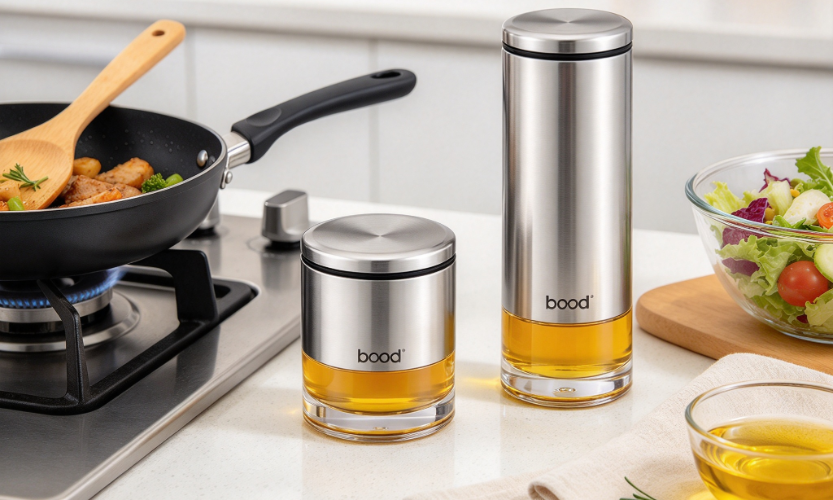
Shape should follow intended use rather than trend. Someone pouring directly into a frying pan wants a controlled stream; someone bringing oil to the table for bread or salad cares more about how the jar looks and feels in hand. A comfortable grip, a base that won't wobble, an opening sized for easy filling, a neck that supports a steady pour, and a profile that actually fits the shelf or counter space — these pieces work together rather than separately. A jar can look striking sitting on a shelf and still feel clumsy the moment someone tries to pour from it or clean it out.
What Should Buyers Know About Stainless Steel Oil Jar Designs?
A stainless steel oil jar draws buyers who want a metal look paired with a sturdy build. Stainless steel shows up across kitchenware because, when the grade and finish are right, it holds up to daily handling and cleans up without much fuss.
That said, the material name on a listing doesn't tell the whole story. Worth checking: how the surface is finished, how the opening is shaped, how the handle is attached, and how the various parts are joined together. The inner surface matters in particular, since it sits in direct contact with stored oil — product listings should spell out what's used there, and buyers should stick to whatever cleaning instructions the manufacturer provides.
| Design Detail | Practical Consideration |
|---|---|
| Body material | Suitability for storing cooking oil |
| Inner surface | Ease of routine cleaning |
| Outer finish | Resistance to visible marks during normal use |
| Handle construction | Comfort and stability when pouring |
| Lid and joints | Fit, access, and ease of maintenance |
| Base design | Stability on the kitchen counter |
Stainless steel works across a wide range of kitchen settings, from a modest home stove to a commercial prep line. How well it actually performs still comes down to the full build, not the material label alone.
How Can an Oil Jar Help Control Pouring?
Pouring control decides a lot about how a jar fits into real cooking. Too much oil hitting a pan at once can leave a cook scrambling, while a stream that comes out unevenly makes it harder to coat food the way a recipe calls for.
The spout does most of the heavy lifting here. Its shape and placement determine how the liquid leaves the jar, and the angle at which someone tilts it adds another variable. A narrow spout can help aim the stream, but it won't stop a spill on its own — flow still depends on the opening size, the jar's overall shape, and how fast the pour happens.
A well-thought-out design lets someone pour at a steady pace without twisting their wrist into an uncomfortable position. A handle set close to the jar's center of balance tends to feel more manageable once there's oil weighing it down. When comparing products, it helps to look at the spout and handle as a pair rather than judging each on its own — a nicely shaped spout loses some of its appeal if the handle forces an awkward grip.
Can a Lid Help Keep Stored Oil in Good Condition?
A lid covers the opening between uses, cutting down on dust and the occasional splash drifting over from a nearby stove. That alone makes storage feel tidier.
The right lid style depends on how the jar gets used day to day. A removable top simplifies both filling and cleaning. A hinged or attached version keeps the lid from going missing during a hectic dinner prep. Fit matters too — a loose cover shifts around when the jar moves, while one that's stiff to remove slows down refilling and routine care.
A lid alone doesn't shield oil from everything that affects its quality. Light, heat, and air exposure still play a role, along with the type of oil stored. Following the storage guidance that comes with the oil itself, and keeping the jar away from unnecessary heat unless it's built for that spot, matters more than the lid alone. For manufacturers, lid design comes down to balancing easy access against solid coverage — the cover needs to open smoothly while still doing its job of protecting what's inside.
How Does the Handle Affect Daily Use?
A handle might look like a minor detail, but it shapes how much control someone has over the jar. Oil jars get lifted and tilted repeatedly, often while the other hand is busy stirring or steadying a pan.
The handle needs enough room for a proper grip, with a surface that stays comfortable through repeated use. A handle that's too thin, poorly placed, or awkward to reach makes the whole jar feel harder to manage than it should be.
Weight shifts the balance point too — a full jar handles differently than one that's nearly empty, and a handle that feels fine when light can feel off once there's oil inside. It helps to judge the handle, body, and spout as a set rather than separately, which matters just as much for home kitchens as for restaurant settings where a jar gets passed around during service. A handle built for a natural grip makes routine pouring feel less like a chore, and it should let someone set the jar back down without any wobble or fumbling.
What Makes Refilling an Oil Jar Convenient?
Refilling is part of owning a reusable container, and it should happen without oil splashing everywhere or needing to pull apart several unrelated pieces first.
The opening needs to match how oil actually gets transferred from its original bottle. A narrow neck often calls for a small funnel. A wider opening lets most people pour directly, as long as the source bottle is easy to control. A removable lid simplifies the whole process, but its design shouldn't introduce extra seams or grooves that are a pain to clean — oil tends to linger around threads and joints after filling.
A few questions are worth asking before buying: does the lid come off without a fight, is the opening visible enough to pour into accurately, would a funnel actually help here, can the neck and surrounding area be reached for cleaning, and does the lid snap back on securely once filling is done. None of this should require holding the jar at an awkward angle — a stable base and a clear opening go a long way toward making refills painless.
Why Is Cleaning Access Important for Kitchen Oil Containers?
Oil leaves a thin film behind even when nothing visibly spills. Over weeks of use, residue builds up around the spout, the lid, handle joints, or wherever the neck meets the body.
A jar that wipes clean on the outside can still be a struggle on the inside. It's worth checking whether the opening gives enough room to reach the interior, and whether the lid comes off for proper care. Cleaning methods vary by material and build — some containers handle a dishwasher cycle fine, others need hand washing, and no one should assume every seal or attached part survives the same treatment as the main body.
Helpful features include an opening wide enough for a cleaning brush, smooth interior walls, and parts that come apart and go back together without guesswork. The spout deserves special attention, since leftover oil around its edge turns the jar sticky during storage and leaves a mark on the counter underneath. Clear care instructions from the supplier round this out, helping buyers avoid a cleaning method that might damage a particular part.
How Should an Oil Jar Fit Into Different Kitchen Spaces?
Kitchens vary wildly in available space. Some have generous counters; others squeeze everything into a narrow strip beside the stove. Restaurants and shared kitchens add another layer, since containers often need moving, cleaning, and restocking on a fixed schedule.
A jar's footprint decides where it can realistically sit. A broad base adds stability but eats up counter space. A taller, narrower jar slots in between other bottles, though its balance still needs a second look. Storage location matters just as much — oil generally keeps better following whatever guidance applies to that specific type, kept clear of unnecessary heat and placed somewhere reachable without shifting other items out of the way.
A sensible setup keeps the jar near the prep area with enough clearance to set it down safely, without blocking tools in regular use or leaving the handle somewhere it might get knocked. In smaller kitchens, footprint and shape can matter just as much as looks. In professional settings, quick access paired with a predictable cleaning and refilling routine tends to carry more weight.
Does the Appearance of an Oil Jar Influence Product Selection?
Kitchenware often sits out in the open on a counter or table, so looks do factor into buying decisions. Some buyers want a clean metal finish, others prefer a clear body, and some are matching a jar to the rest of their kitchen set.
Appearance should back up the function, not replace it. A decorative surface that shows every fingerprint or oil smudge adds extra upkeep. An elaborate lid or an overly narrow spout, chosen purely for looks, can make cleaning harder than it needs to be.
Retailers do well to start with the intended buyer. A jar meant for daily cooking benefits from a practical shape and surfaces that wipe clean easily. One aimed at table service might lean more into appearance, a comfortable pour, and matching the rest of the kitchenware. Product photos that clearly show the lid, spout, handle, opening, and base help shoppers judge the design before buying, and descriptions that accurately explain material and intended use make comparison shopping easier without relying on looks alone.
What Should Wholesale Buyers Check Before Sourcing an Oil Jar?
Wholesale buyers juggle more than the product itself — packaging, consistency across units, and the specific market being served all come into play. A jar meant for home cooks carries different priorities than one chosen for restaurants, gift sets, or a coordinated kitchenware line.
A sourcing review tends to cover a handful of areas worth double-checking against actual samples rather than just spec sheets.
| Review Area | What to Confirm |
|---|---|
| Material and description | Materials match actual construction claims |
| Pouring behavior | Spout and handle allow controlled flow |
| Refill access | Opening and lid support easy filling |
| Cleaning requirements | Inner surfaces and lid stay reachable |
| Packaging and handling | Protection during storage and transport |
| Market fit | Design matches intended customer and setting |
Handling a sample often reveals what photos can't — a joint that doesn't quite line up, a lid that sticks, a pour that drifts off to one side. These checks also give manufacturers and distributors a shared language, since a buyer who can describe a specific problem clearly makes it easier for a supplier to judge whether an existing design works or needs a tweak.
How Can OEM Customization Address Different Buyer Needs?
OEM work lets kitchenware businesses shape a jar around their actual market, adjusting body shape, handle design, surface finish, lid structure, packaging, and overall presentation depending on what the manufacturer can offer.
Customization works best starting from a clear use case. A jar for everyday cooking leans toward grip, pouring control, and easy cleanup. One built for a gift set needs packaging and appearance that hold up through shipping and still look good on a shelf.
A stainless steel oil jar can sit alongside other kitchen accessories in a broader product line, but each item still needs its own clear job — an oil jar stores and pours liquid, a grinder breaks down dry ingredients, and the design of each should reflect that difference even within the same collection.
Before locking in a customized design, it's worth reviewing samples firsthand: checking the lid fit, the spout shape, where the handle sits, how filling actually works, and what cleaning looks like in practice. Packaging and product descriptions deserve the same scrutiny. An oil jar earns its place on the counter when its form matches how people actually cook, store ingredients, and keep their workspace in order — which is really the detail worth comparing, more than how it photographs.
Recommended Products
-
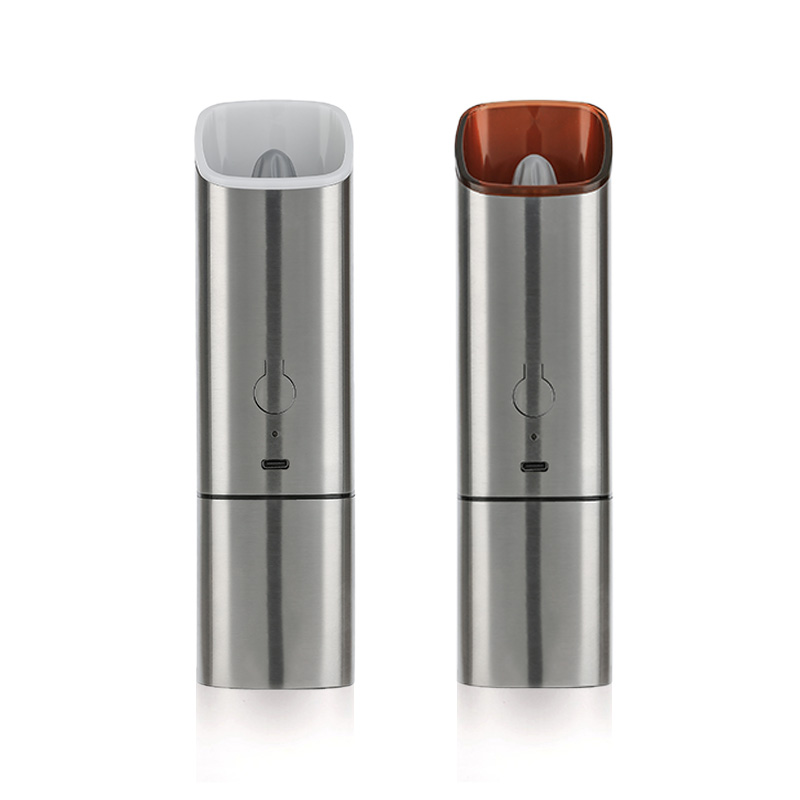 CH-01
USB Rechargeable Electric Salt Pepper Grinder
-
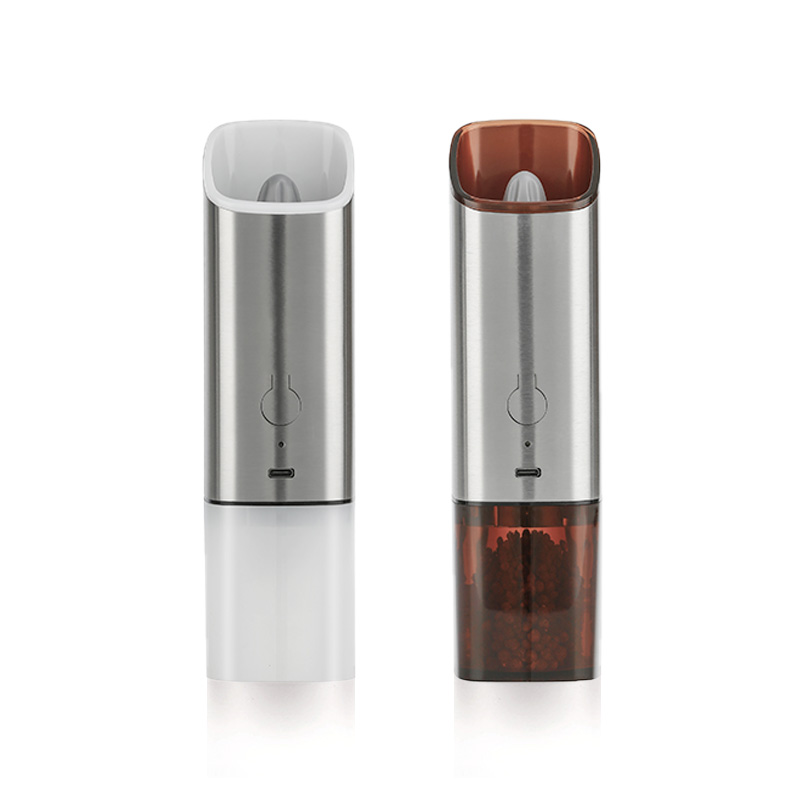 CH-01P
USB Rechargeable Electric Salt And Pepper Mill Set
-
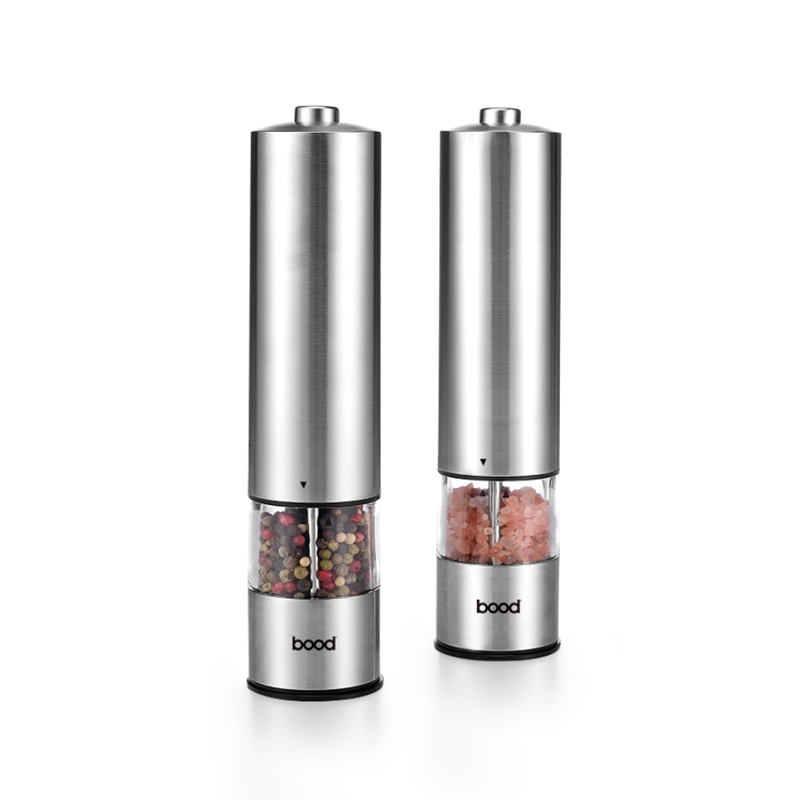 DH-00
Classy Design Electric Pepper Mill With Stainless Steel Body
-
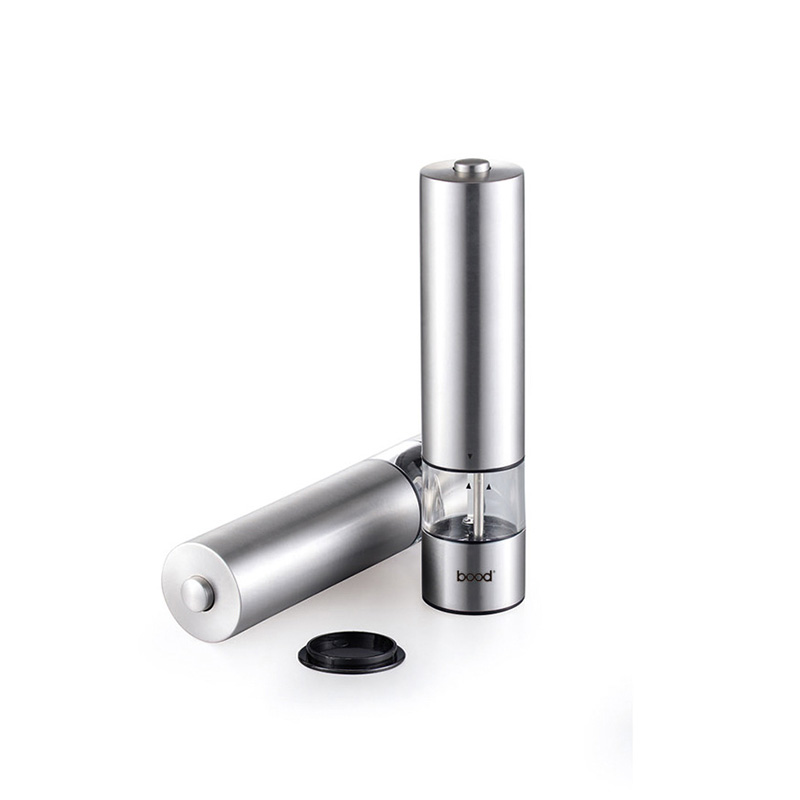 DH-01
Classic Electric Stainless Steel Salt And Pepper Grinder
-
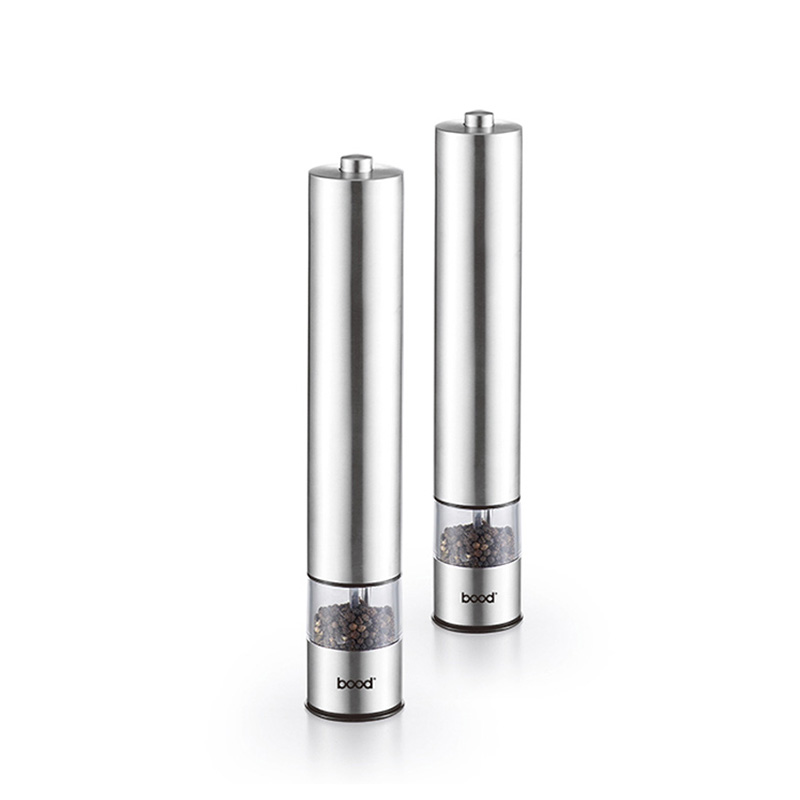 DH-01C
Electric Tall Salt and Pepper Mill Grinder with Flat Head
Copyright © Yongkang Funansheng Industry & Trade Co., Ltd.

China Pepper Grinder