


 Language
 English
 Deutsch
 日本語
 Inquiry
Don't hesitate to send a message
Yongkang Funansheng Industry & Trade Co., Ltd.

+86-579-87301950
Industry News
How Can a Stainless Steel Oil Jar Keep Counters Clean
Look at the spot beside your stove where the oil bottle usually sits. A sticky ring often marks the place, with a few dust specks stuck in it. A kitchen can be wiped down every evening and still carry that film. A Stainless Steel Oil Jar will not remove every drip. A well-built one does reduce the routes by which oil reaches the counter, and that makes daily cleaning shorter.
Choosing an Oil Jar for Kitchen use looks like a small decision. Still, the container is touched every time food is cooked, so its spout, lid, handle, and surface shape the whole routine. The sections below explain why countertops turn oily, what design details help, and how to care for the jar.
Why Countertops Get Oily Around Ordinary Bottles
Oil stains rarely appear without a cause. They build up through repeated small events that are easy to miss.
Residue at the Opening
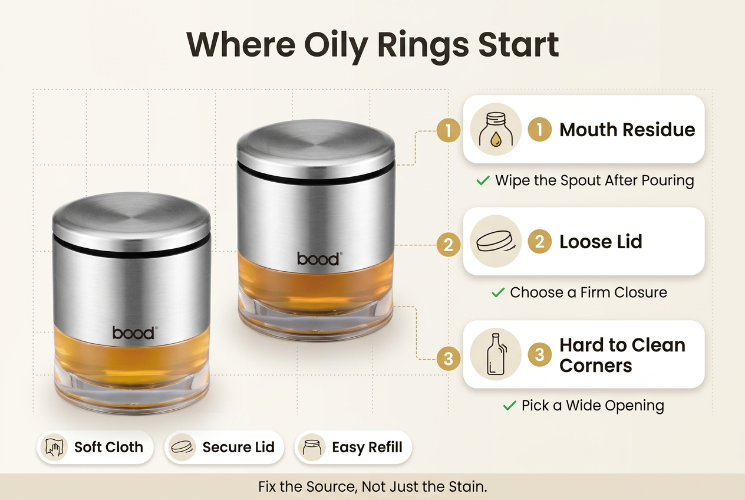
After pouring, a thin layer of oil stays around the bottle mouth. When the bottle is set down, that layer creeps along the outside wall and pools at the base. The result is a sticky ring on the counter, greasy fingerprints on the neck, and dust clinging to both.
Wiping the counter removes the mark for a day. The next pour restarts the cycle, so the source needs attention, not only the stain.
Loose or Poorly Fitted Lids
A lid that sits loosely lets oil escape when the container is moved or knocked. This happens often on a crowded shelf beside salt, sauces, and spice jars. A secure closure keeps oil inside during ordinary handling and keeps dust out.
Narrow Necks and Hard-to-Reach Corners
Some bottles have slim necks and internal shapes that a sponge cannot reach. Old oil collects in these corners and can turn sticky or develop an unpleasant smell. A wide opening and removable parts make routine washing much easier.
How a Stainless Steel Oil Jar Keeps the Counter Cleaner
The material helps, though the design does most of the work. Spout, lid, opening, and handle need to function together.
- Spout shape: A well-formed outlet guides oil into the pan and limits the amount that lingers on the tip. Some designs include a return-flow path that lets residue drain back inside. Check the actual pouring structure, because a narrow spout alone does not guarantee a clean cut-off.
- Lid and sealing parts: A lid that closes firmly protects oil from dust and reduces leaks. Some jars add a silicone ring for a closer fit. Test whether the lid opens smoothly with one hand and stays put when the jar is lifted.
- Controlled flow: Pouring too much oil causes splashes in a hot pan and drips on the stove edge. A comfortable handle and a practical spout let the cook guide a thin stream over a salad or a frying pan.
- Smooth exterior: Stainless steel gives a surface with few grooves, so a soft damp cloth removes an oily film quickly. Fewer textured areas mean fewer places for grease to hide.
Everyday Practicality
A jar that sits next to the stove faces heat, steam, and frequent handling. Material and shape need to hold up to that.
Stainless steel resists daily wear when the grade and construction are suitable, and it does not shatter if knocked off a shelf, which matters in a busy household with children or a small kitchen with tight space. It also blocks direct light. Some oils are sensitive to light, so an opaque body helps, although storage quality still depends on the type of oil, room temperature, and how well the lid closes.
The plain look fits modern, minimalist, industrial, and traditional kitchens alike. It sits comfortably beside steel pots, ladles, and other countertop tools without clashing.
Stainless Steel Compared With Glass
Both materials have a place, and the better choice depends on habits.
| Feature | Stainless Steel Jar | Glass Bottle |
|---|---|---|
| Handling | Resists drops and knocks | Can break if dropped |
| Light protection | Blocks direct light | Depends on glass tint |
| Oil level | Not visible from outside | Easy to see |
| Exterior cleaning | Smooth surface wipes easily | Depends on bottle shape |
| Appearance | Simple and functional | Wide range of styles |
Households that value durability, light protection, and a coordinated look often prefer steel. Glass suits cooks who want to see the oil level at a glance or who keep several oils and need to tell them apart without opening lids. Whichever material you pick, spout design and closure quality still decide how clean the counter stays.
What to Look For When Choosing
A good Oil Jar for Kitchen use should make pouring, storing, and washing easier. Appearance alone does not show that.
- Spout: Look for a clearly formed outlet and controlled flow. Confirm that it can be cleaned without special tools.
- Lid and seal: Check that the lid closes firmly, that any sealing ring can be removed, and that all parts can be washed.
- Capacity: A small jar suits occasional cooking and limited counter space. A larger one suits families who cook daily. Avoid filling to the brim, since a little empty space makes lifting and pouring steadier.
- Opening: A wide mouth helps with refilling and with reaching the inside wall during cleaning.
- Handle and balance: The grip should feel secure when the jar is full. Check handle position, distance from the body, and stability when set on the counter.
Handle the sample if possible. A jar that looks neat in a photo can feel awkward when filled and tilted over a hot pan.
Keeping the Jar Clean
Even a well-designed jar needs a short routine. A few habits prevent grease from building up around the spout and lid.
- After pouring: Wipe the spout with a clean soft cloth. This stops residue from running down the body.
- Exterior: Clean the body with a soft cloth and mild cleaning solution. Avoid abrasive pads and harsh cleaners that scratch the finish.
- Lid and seal: Remove oil film around the lid, sealing ring, and spout. Follow the maker's instructions before taking parts apart, and dry every piece fully before reassembly.
- Placement: Keep the jar on a stable, dry surface away from direct heat. A fixed spot near the cooking area keeps it within reach and lets you place a small mat or tray under it for easy cleanup.
Refilling in small amounts, and finishing the old oil before adding new, also keeps the inside fresher.
Practical Kitchen Oil Storage for Buyers
Retailers, distributors, and brand owners who source kitchen accessories should look at the same details that matter to cooks: container structure, pouring convenience, closure design, exterior finish, and ease of cleaning. Different households ask for different things. Some want controlled pouring, others want larger capacity, a certain countertop look, or simple refilling.
A Stainless Steel Oil Jar that handles these needs gives customers a product they notice every day, because it keeps a small but irritating mess off the counter. Buyers can contact the manufacturer to discuss available designs, material specifications, customization, and packaging options for their product range.
Recommended Products
-
 CH-01
USB Rechargeable Electric Salt Pepper Grinder
-
 CH-01P
USB Rechargeable Electric Salt And Pepper Mill Set
-
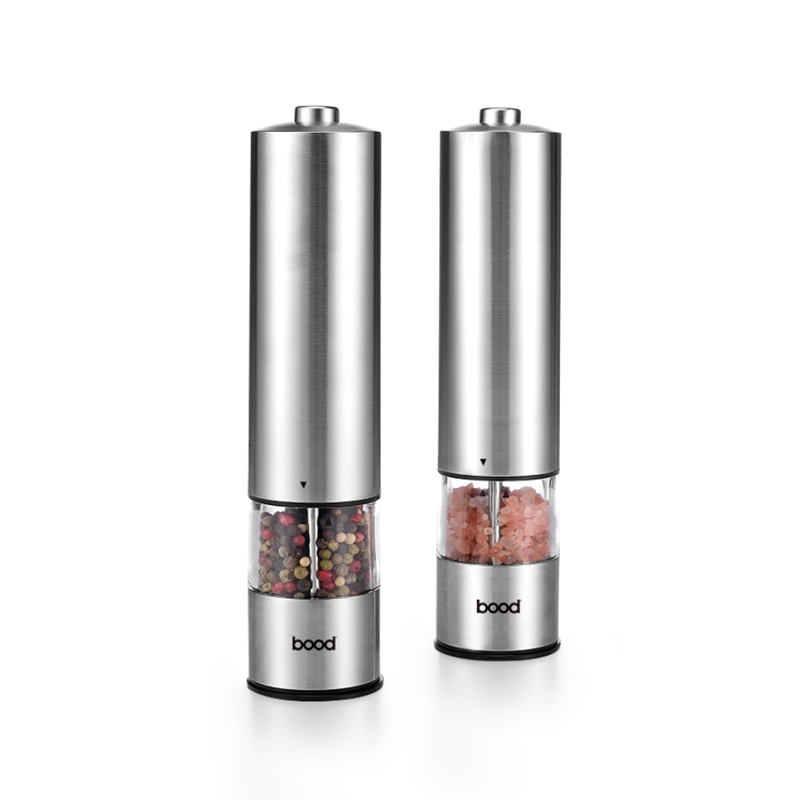 DH-00
Classy Design Electric Pepper Mill With Stainless Steel Body
-
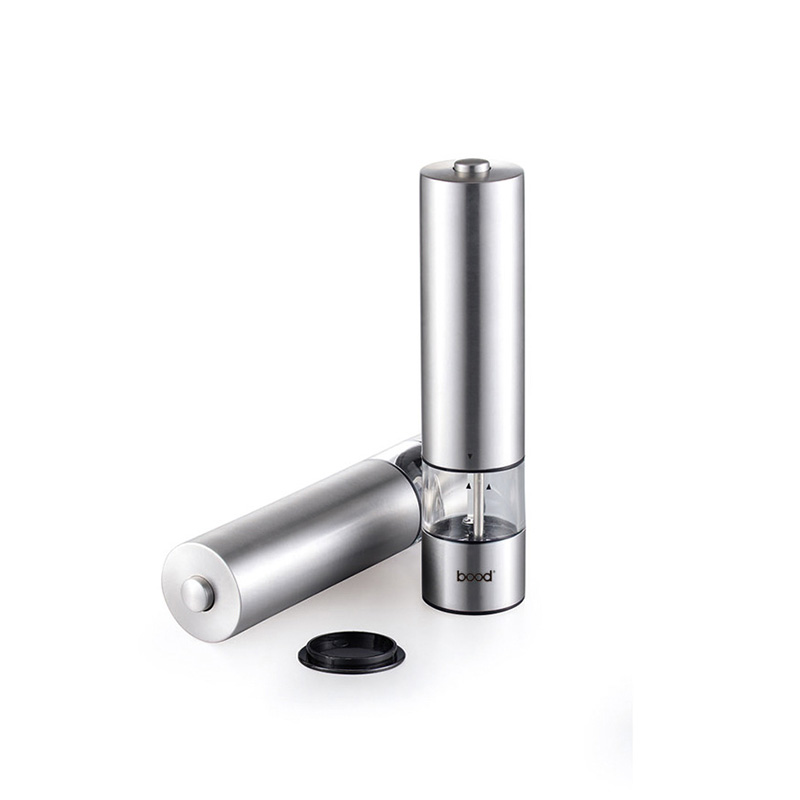 DH-01
Classic Electric Stainless Steel Salt And Pepper Grinder
-
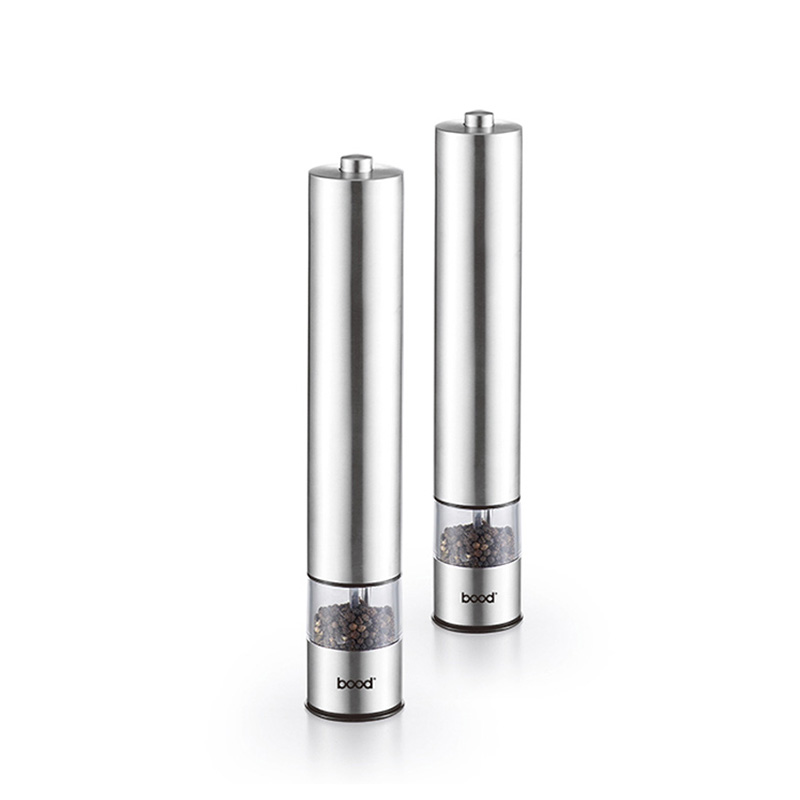 DH-01C
Electric Tall Salt and Pepper Mill Grinder with Flat Head
Copyright © Yongkang Funansheng Industry & Trade Co., Ltd.

China Pepper Grinder