Ground pepper that delivers weak aroma is one of those kitchen problems that tends to get blamed on the pepper itself. The spice seems fine in the jar, but the result on the plate is flat — present in color, absent in character. The frustration is real, and it is common. What many cooks and procurement buyers do not initially account for is that the extraction process, not the ingredient, is usually where the problem originates. Understanding how pepper flavor actually releases, and what a pepper mill's design does to support or undermine that release, changes both how the tool is used and how it is chosen.
What Causes Pepper Flavor to Stay Locked In?
CHEM
The Chemistry Behind Aroma Release
Pepper's aroma compounds are stored in oil glands inside the peppercorn's outer layer. These glands remain sealed until the cell walls around them are physically broken. Grinding does this. The moment the mill's mechanism crushes and shears the peppercorn, volatile aromatic compounds — the ones responsible for the warm, complex, slightly floral character of good pepper — are released into the air and onto the food. Pre-ground pepper has already been through this process before packaging. The oils that were released during grinding have been slowly oxidizing since that moment. What reaches the food is a shadow of the original compound profile, not the active, freshly released aroma that grinding at the point of use provides. This is not a minor difference — it is a fundamental difference in what the pepper is contributing to the dish.
OXID
How Oxidation Erodes Aroma Over Time
Pepper essential oils degrade on contact with air. The rate depends on temperature, humidity, and the surface area exposed. A whole peppercorn has a relatively small surface area and a sealed outer layer that limits air penetration — its oils remain reasonably stable for months. Ground pepper has an enormously larger surface area and no protective layer. Aroma compounds evaporate and oxidize within hours of grinding, and the loss accelerates if the ground pepper is stored in a warm or humid environment. This is why grinding at the moment of use is not a preference — it is the mechanism. A pepper mill used correctly extracts aroma that simply cannot be present in a product that was ground earlier.
How Grinding Mechanics Affect Flavor Extraction
The Role of the Grinding Mechanism
Not all grinding is equivalent. The shape and material of the mechanism determine how the peppercorn is broken down — whether it is sheared, crushed, or torn — and each method releases the aromatic oils at different rates and in different particle distributions. A ceramic burr mechanism shears the peppercorn with relatively low heat generation, which preserves volatile compounds that would degrade under higher friction temperatures. A steel mechanism applies more force and generates slightly more heat, which suits harder whole spices but requires attention to grinding speed when flavor preservation is the priority. The consistency of the grind matters too. A mechanism that produces uniform particle size gives even flavor distribution across the food. An inconsistent grind — some particles much coarser than others — creates uneven aroma release, with some areas of the dish delivering strong pepper character and others barely registering.
Why Friction Heat Is Worth Managing
Friction between the grinding surfaces and the peppercorn generates heat. The amount is small in a single grinding action, but in applications where large volumes are ground continuously — commercial kitchen use, catering, food production — accumulated heat can measurably affect the aroma profile of the output. Volatile compounds evaporate at relatively low temperatures, so even modest heat elevation above ambient can accelerate the loss of the lighter aromatic fractions that give freshly ground pepper its distinctive sharpness. Slower grinding preserves more of these compounds than rapid grinding. This is a practical consideration for production environments, where the speed of the grinding operation may be working against the flavor outcome the operation is trying to achieve.
How to Optimize Flavor Extraction When Using a Pepper Mill
Use Whole Peppercorns & Keep Sealed
The starting material determines the ceiling of the flavor outcome. Whole peppercorns that have been stored in a sealed, dark container retain their essential oils far better than those stored in clear containers near heat sources. The oils that are still present in the peppercorn at the moment of grinding are the ones that can be extracted. Depleted starting material cannot be compensated for by grinding technique.
When evaluating peppercorn storage for food service or production use, airtight containers in cool storage locations are the practical standard. The peppercorn should smell vigorously aromatic when a container is opened. If the aroma is faint, the useful oil content has already diminished substantially.
Match Grind Size to Application
Grind size is one of the two variables that directly shape the flavor delivery of ground pepper. Finer grinds produce a larger total surface area from the same volume of peppercorn, which means faster and more intense initial flavor release but shorter aroma persistence. Coarser grinds produce less surface area, slower release, and a longer-lasting presence on the palate.
Using fine grind as a finishing seasoning on a steak produces an immediate pepper cloud that dissipates quickly. Using coarse grind in a liquid-based sauce where it needs to integrate and soften is equally mismatched. The grind setting is not a personal preference — it is a functional specification for the dish.
Grind at the Moment of Plating
Grinding in advance, even minutes before, is a measurable concession on flavor. The practical standard for flavor extraction is to grind at the moment the pepper reaches the food. In a table service environment, this means the mill is used at the table or at the pass. In a home kitchen, it means the mill is in hand when the plate is being finished rather than sitting on a nearby counter while other steps are completed.
The difference in aroma intensity between pepper ground thirty seconds before plating and pepper ground thirty minutes before is not subtle. It is the difference between an active, vibrant aromatic contribution and a muted one.
Control Grinding Speed at Volume
In commercial or production contexts, the pace of grinding is a flavor variable. A mill that is operated slowly — with deliberate, measured rotation — generates less friction heat per gram of pepper than one run rapidly. For operations grinding significant quantities, building a slower grinding pace into the technique is a practical way to preserve more of the volatile fraction without changing any other part of the process.
Practical grind size guidance by application:
- Fine grind: Sauces, soups, marinades, and applications where the pepper is incorporated into a liquid or paste. Fine grind disperses evenly and integrates into the dish.
- Medium grind: General table use, eggs, vegetables, and everyday seasoning where the pepper is applied to a surface. Medium grind balances intensity and staying power.
- Coarse grind: Steaks, roasted meats, finishing applications, and spice rubs. Coarse grind provides visible texture and bursts of concentrated flavor during eating.
Does the Mill Material Affect Flavor Extraction?
CER
Ceramic Mechanisms and Low-Heat Grinding
Ceramic grinding mechanisms are harder than steel and generate less friction heat during the grinding action. They also resist corrosion and do not impart any metallic character to the output, which matters in applications where subtle flavor contribution from the mechanism itself would be detectable. For applications where aroma preservation is the priority, ceramic is the material specification that supports it. Ceramic mechanisms wear more slowly than steel under normal use, which also means the grind consistency remains stable over longer service periods. In food service contexts where mechanism replacement is an operational interruption, this durability reduces the frequency of that disruption.
PORT
How a Portable Pepper Mill Performs Under Use Conditions
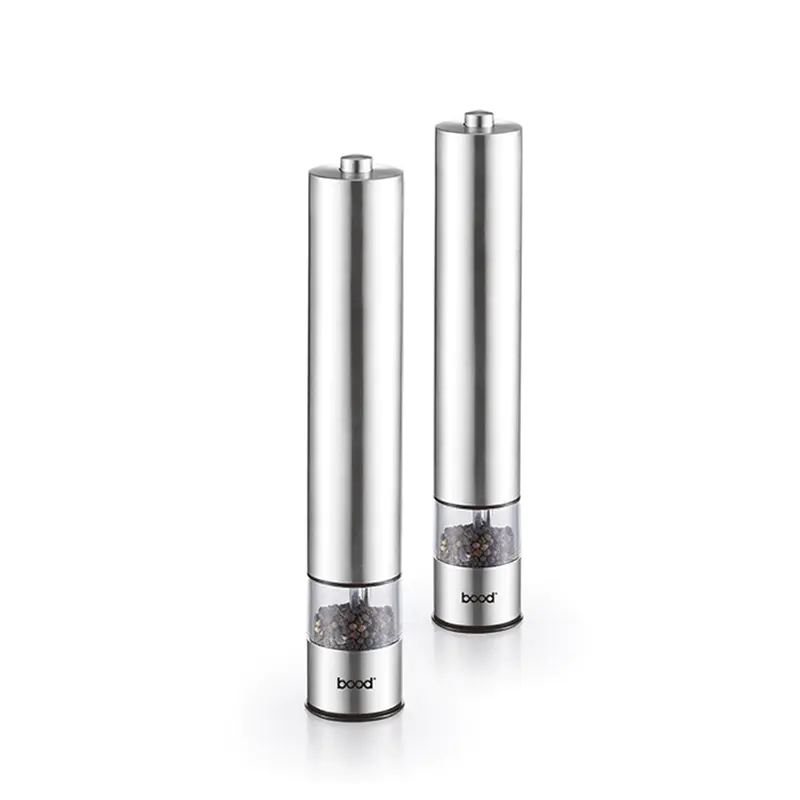
A portable pepper mill is designed for convenience — compact form, light weight, suitable for tabletop, travel, or service contexts where a large mill would be impractical. The trade-off in some portable designs is mechanism precision. Smaller mechanisms have less grinding surface area, which can reduce grind consistency and limit the range of grind settings available compared to a full-size kitchen mill. That said, a well-engineered portable mill with a quality mechanism produces flavor extraction that is functionally comparable to a larger unit. The mechanism design and material matter more than the physical size of the mill. Buyers evaluating portable pepper mill options should request grind consistency specifications and test units across the available grind settings before committing to production quantities.
PLAS
What to Know About Plastic Pepper Mill Construction
A plastic pepper mill is typically specified for cost-sensitive applications — budget kitchenware, single-use or limited-use contexts, promotional items, or markets where price is the primary purchase driver. The mechanism in plastic mills is often a standard insert rather than a precision-engineered grinder, and the grind consistency reflects this. For flavor extraction, the relevant question about a plastic pepper mill is whether the internal mechanism — usually a ceramic or metal insert housed in the plastic body — delivers consistent particle sizing. The plastic exterior does not affect the grinding action. What matters is the quality of the mechanism it contains. A well-specified plastic mill with a quality ceramic insert can deliver acceptable grinding performance; a plastic mill with a low-tolerance mechanism will produce inconsistent grind and uneven flavor delivery regardless of how it is used.
Portable Pepper Mill vs Traditional Pepper Mill: A Practical Comparison
| Feature |
Portable Pepper Mill |
Traditional Pepper Mill |
| Grind range |
Limited to moderate |
Wide — fine to coarse |
| Mechanism precision |
Varies by design |
Generally higher |
| Durability |
Moderate |
High in quality materials |
| Use context |
Travel, tableside, service |
Kitchen, professional use |
| Customization options |
Shape, color, material |
Material, size, mechanism type |
| Production cost |
Lower |
Moderate to higher |
| Suitability for OEM |
High — wide format options |
Moderate |
Complementary, Not Competing
The comparison is not a ranking — it reflects the different roles these products serve. A portable mill is not a compromised traditional mill. It is a different product for a different use context, with its own specification requirements. Buyers developing a product range should treat them as complementary rather than competing, covering different segments of the market with appropriate specifications for each.
Common Mistakes That Reduce Pepper Flavor Extraction
Understanding where flavor loss happens is as useful as understanding how to preserve it. Several habits consistently produce weaker results.
Habits That Weaken Flavor Output
- Using pre-ground pepper as a substitute for freshly ground: The aroma compounds have already oxidized. The seasoning adds color and a mild flavor note, not the full aromatic profile of fresh grinding.
- Grinding too far in advance: Even in a professional kitchen, grinding pepper into a container for later use means the aromatic fraction is partially lost before the pepper reaches the dish.
- Using a fine grind setting for all applications: Fine grind dissipates quickly. On a steak or roasted meat, this eliminates the textural and flavor-burst contribution that coarse grind provides.
- Storing whole peppercorns in a warm or brightly lit location: Heat and light both accelerate oil degradation in the peppercorn before it is ever ground. Dark, cool, sealed storage is not optional if the starting material quality matters.
- Using a mill with a worn or inconsistent mechanism: A mechanism that has lost its precision produces variable particle sizes that deliver uneven flavor. The tool's condition directly affects the result.
- Grinding rapidly in high-volume settings: Speed generates heat. Heat degrades volatile compounds. In production contexts, this is a controllable variable that affects flavor output at scale.
What to Consider When Choosing a Pepper Mill Manufacturer
Mechanism Quality
A pepper mill's functional value is entirely determined by its mechanism. The exterior — material, shape, finish, branding — affects consumer perception and commercial positioning, but it is the grinding mechanism that determines whether the product actually delivers on its purpose. A pepper mill manufacturer whose production process includes mechanism precision testing, grind consistency verification, and grind range calibration is producing a product that can be specified with confidence. Buyers evaluating a pepper mill factory should ask specifically about mechanism quality control: how grind particle size is tested, what consistency tolerances are applied across a production batch, and what the process is for identifying and rejecting mechanism components that fall outside specification.
Material Selection
The materials used in the body and mechanism both affect the product's market positioning and its functional performance. Mechanisms in ceramic, steel, and combination configurations have different performance profiles and price implications. Body materials — wood, acrylic, stainless steel, plastic — affect durability, weight, aesthetic appeal, and cost structure. A pepper mill manufacturer with access to a range of mechanism and body material combinations gives buyers more scope to develop differentiated products for different market segments.
OEM Capability
For buyers developing private label or branded product lines, the manufacturer's OEM capability is the relevant specification. This covers shape customization, color and finish options, logo integration, packaging design, and order quantity requirements. A pepper mill factory that operates a genuine OEM program — with engineering support for custom shapes and mechanism integration — is a different kind of supplier than one that offers minor finish customization on standard catalog items.
Why Many Buyers Source from China Pepper Mill Suppliers
China pepper mill manufacturing covers the full range from commodity-grade kitchenware to precision-mechanism products supplied to international housewares brands. The practical sourcing advantages include production scale, access to diverse material and mechanism components within a close supply chain, and OEM customization capability that supports both large and smaller branded product programs.
Qualifying a Supplier
For buyers sourcing through a China pepper mill supplier, the qualification process should address mechanism quality documentation, material certification, production consistency testing, and the supplier's experience with export market requirements. A manufacturer with an established export record and documented quality processes is a different risk profile from one without it.
Selecting the Right Pepper Mill for Stronger Flavor Extraction
The relationship between the grinding tool and the flavor outcome is direct. A well-designed mill with a precise mechanism, appropriate material choice, and the right grind range gives the user control over flavor extraction that a poor-quality mill cannot offer regardless of technique. The application — whether it is a restaurant table mill, a portable travel unit, a plastic pepper mill for a budget kitchenware line, or a premium wood-body kitchen mill — determines which specifications matter and in what order.
For buyers and product developers building or expanding a kitchenware line, selecting a manufacturer who can support the full specification — mechanism quality, material range, OEM customization, and export documentation — simplifies the sourcing process and reduces the quality gap between the product as specified and the product as delivered.
About the Manufacturer
Yongkang Funansheng Industry & Trade Co., Ltd. works with buyers across portable, standard, and custom pepper mill configurations, with OEM program support and mechanism quality documentation available for product development and sourcing inquiries. Sharing your application requirements, target market, and volume is the practical starting point for a sourcing conversation.



 Language
 English
 Deutsch
 日本語
日本語 Inquiry

 CH-01
CH-01 CH-01P
 DH-00
DH-00 DH-01
DH-01 DH-01C